8 Inch Face Recognition
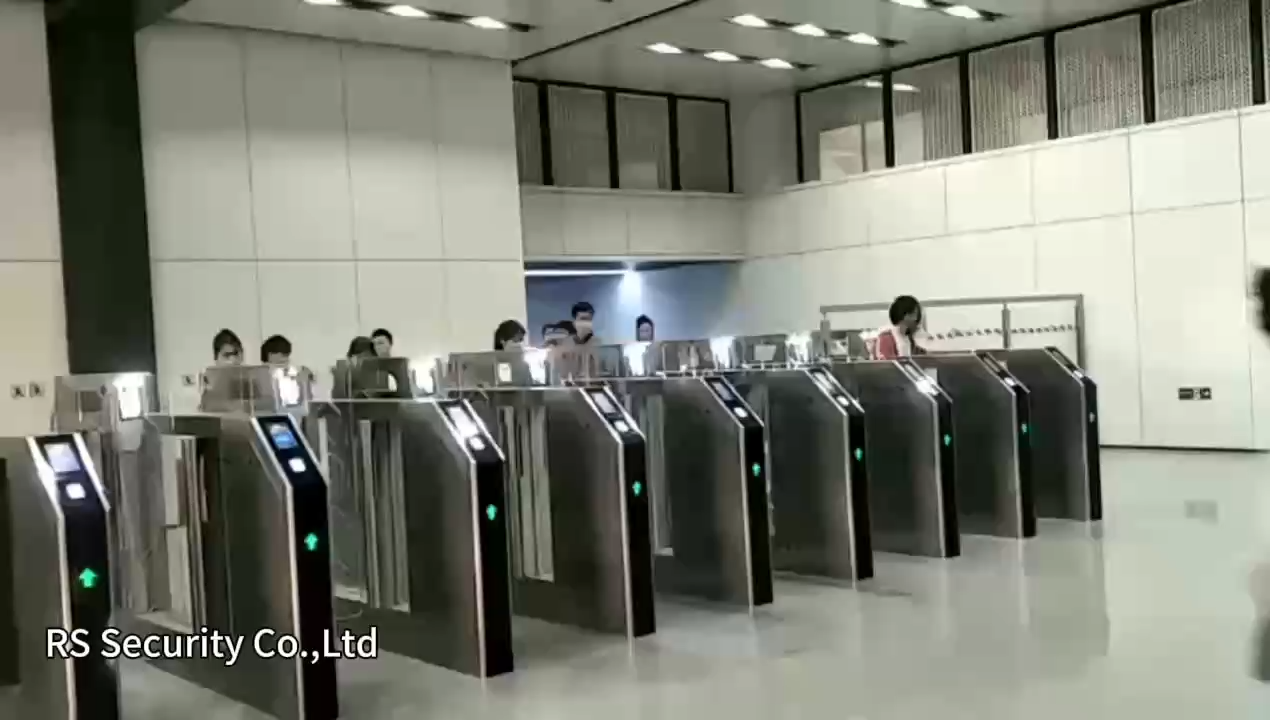
8 inch biometric face and fingerprint recognition reader RS 8001-E6 is an intelligent security device that uses facial recognition technology to secure environments ranging from airports and unattended retail stores.
Facial recognition technology can also be used in homes and businesses to keep out unwanted visitors; however, its implementation has caused considerable controversy.
Accurate Recognition
Face recognition systems are designed to detect and recognize people by their facial features, decreasing security breaches and privacy violations. They can even identify people in challenging conditions like when they’re wearing glasses or hats. Furthermore, this technology can identify unique features about each person for more accurate biometric identification methods.
Accuracy of face recognition devices depends on several factors, including screen size, chip type and recognition speed. Some models can recognize an individual in under a second – making them suitable for applications where speed is of the utmost importance, such as access control or time-and-attendance tracking.
The 8 inch face recognition machine features a large, high-resolution IPS display screen equipped with dual cameras to capture facial data even in dim lighting conditions. Highly resistant to spoofing, its industry-leading 1:1 comparison recognition rate stands at 99.7% while live detection accuracy rate reaches 98.3%@1% mis-rejection rate; powered by rockchip RK3288 quad-core processor it ensures reliable operation – perfect for office buildings, residential communities, schools or commercial locations.
Enhanced Security Measures
Face recognition technology is an advanced security measure that uses facial analysis to verify an individual’s identity and prevent unauthorised entry to restricted areas. It’s an invaluable asset in schools, organisations, homes and even businesses; working by taking live images of people before comparing it with an image database to identify them based on physical features like hair length or glasses worn. Face Recognition Technology is highly accurate – even in situations such as school where facial hair or glasses might obstruct recognition efforts.
This system’s main advantage lies in its ability to increase security by preventing password breaches and hacking attempts, eliminating physical ID cards which could become lost or stolen, and being more reliable than fingerprint scanning as it works in different lighting conditions and angles – perfect for high security environments such as airports.
Face recognition technology also offers another advantage: tracking a person’s movements and activities. This feature is especially advantageous in healthcare industries where medical supplies or patient records need to be secured quickly and safely, or schools attempting to track attendance of students and staff more effectively than using paper registers or manual checks.
Furthermore, this system can help banks and financial services prevent fraud by quickly identifying suspicious individuals in crowded areas such as airports and train stations – thus improving public safety. Furthermore, unmanned retail can use it to verify payments and optimize shopping experiences.
But this technology raises concerns about privacy rights and can cause an erosion of trust among the general public. Some fear face recognition will be used by law enforcement agencies to monitor large populations without their knowledge or consent, while others worry about its accuracy depending on factors like camera quality and lighting conditions.
Enhanced Interaction
Utilizing facial recognition allows users to log on without using passwords or PINs; the technology can identify multiple people simultaneously and scan faces for signs of drowsiness or other conditions, tracking eye movements to detect any suspicious behavior – creating a powerful security measure against identity theft and other crimes.
There have been growing concerns regarding the accuracy of face recognition technology used by law enforcement agencies. Due to these reservations, several major facial recognition vendors have stopped selling their software directly to law enforcement, while several cities have banned its use by government entities due to Black Lives Matter protests about police brutality. Yet despite these issues, face recognition technology can still provide numerous safety and convenience benefits in everyday situations.
Facial recognition technology can be used for various applications, including access control, self-service check-in and attendance management. It may also be employed in public spaces to detect unwanted visitors – but when designing an effective security system it should only be one part of its security measures.
Face recognition technology must take into account any biases it might contain and any impact it may have on individual privacy, while facial recognition systems can only ever be as accurate as the data fed into them.
Researchers have investigated the effects of race on human face recognition abilities for over five decades. Studies show that humans recognize faces of their own race more accurately than those belonging to other races – this phenomenon is known as “other-race effect” (ORE).
Researchers have long investigated the impact of race on facial recognition algorithms, with most algorithms showing some degree of overrepresentation by other races (ORE). Here, we investigate factors affecting its magnitude within facial recognition algorithms.
We present results from a face recognition experiment which compares performance between 2D upright and inverted faces and 3D stereoscopic faces. Our analysis supports the hypothesis that 3D stereoscopic details improve recognition during holistic processing while not impacting featural processing.
Easy Maintenance
Face recognition technology is an efficient and secure tool, ideal for use in various settings. This device can help track attendance and enhance security measures in numerous ways; additionally, it can integrate seamlessly with other systems for seamless operation.
This technology utilizes “human intelligence” and cutting-edge technologies to recognize individuals and ensure security. It can accurately recognize faces even under low lighting conditions. Furthermore, its easy installation and integration into existing security and operational systems make it a cost-effective upgrade option for businesses without major overhauls or expensive equipment purchases. Infrared scanning and thermal imaging prevent spoofing while infrared tracking provides easy interaction. Touch screens may also be added for additional interactivity purposes.