5 Inch Face Recognition Terminal
Facial recognition(biometric face scanner) technology has recently caused significant public outrage. Some groups want regulating law enforcement use while others advocate bans on face-matching databases entirely.
However, research into factors affecting face recognition memory rarely compares the effects of race and familiarity within one experiment. This research endeavors to fill this void.
Enhanced Visible Light Facial Recognition
RS Security Co’s RS 800E5 uses state-of-the-art visible light facial recognition technology for touchless identification in a safe and hygienic manner. This cutting-edge face detection terminal offers touchless face identification in an effort to ensure security performance on all fronts, especially among individuals wearing masks, as well as offering anti-spoofing functionality against fake photo/video attacks.
This new face recognition technology can distinguish between real humans and artificial ones, including those wearing masks, glasses, headbands or beards. The algorithm employs mathematical linear representation to capture and analyze individual pixels within an image before filtering it to eliminate changes due to distance, posture, viewing angle or lighting intensity changes and filter data accordingly. Furthermore, it can even differentiate between faces belonging to people of various ages.
Additionally, it features self-learning capabilities to adapt to varying environmental conditions, and can quickly and accurately recognize faces within one second, even if people are moving or have part of their face partially covered by clothing or something else. It represents truly innovative biometric technology which will shape its future development.
RS 800E5 facial recognition system uses Deep Learning technology, enabling it to overcome some of the limitations imposed by earlier systems that relied solely on traditional pattern recognition, including high requirements for hardware platforms and performance, restrictions on external lighting or camera angles, as well as protection against false identifications based on photos or video recordings.
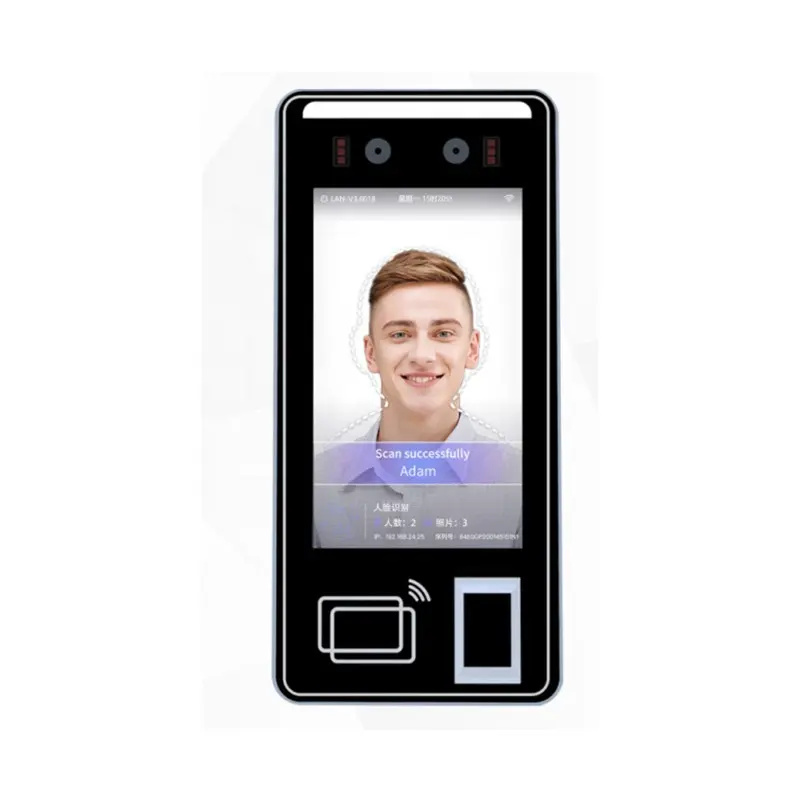
Utilizing dual cameras for real-time detection, this cutting-edge facial recognition terminal is capable of recognizing people wearing masks, sunglasses, headbands or beards and can still operate in low light conditions. Additionally, its capabilities extend to verifying fingerprints, cards and faces, with up to 10,000 face templates stored for verification. Rated IP65 for harsh environments usage conditions.
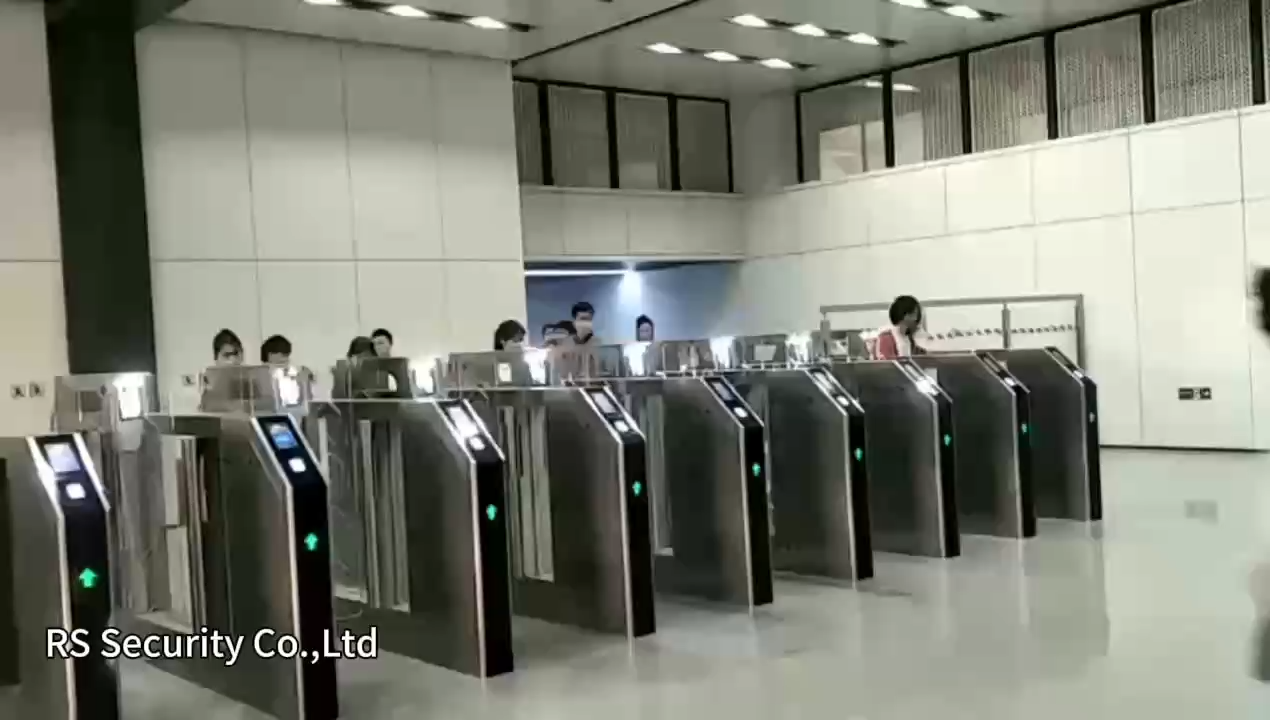
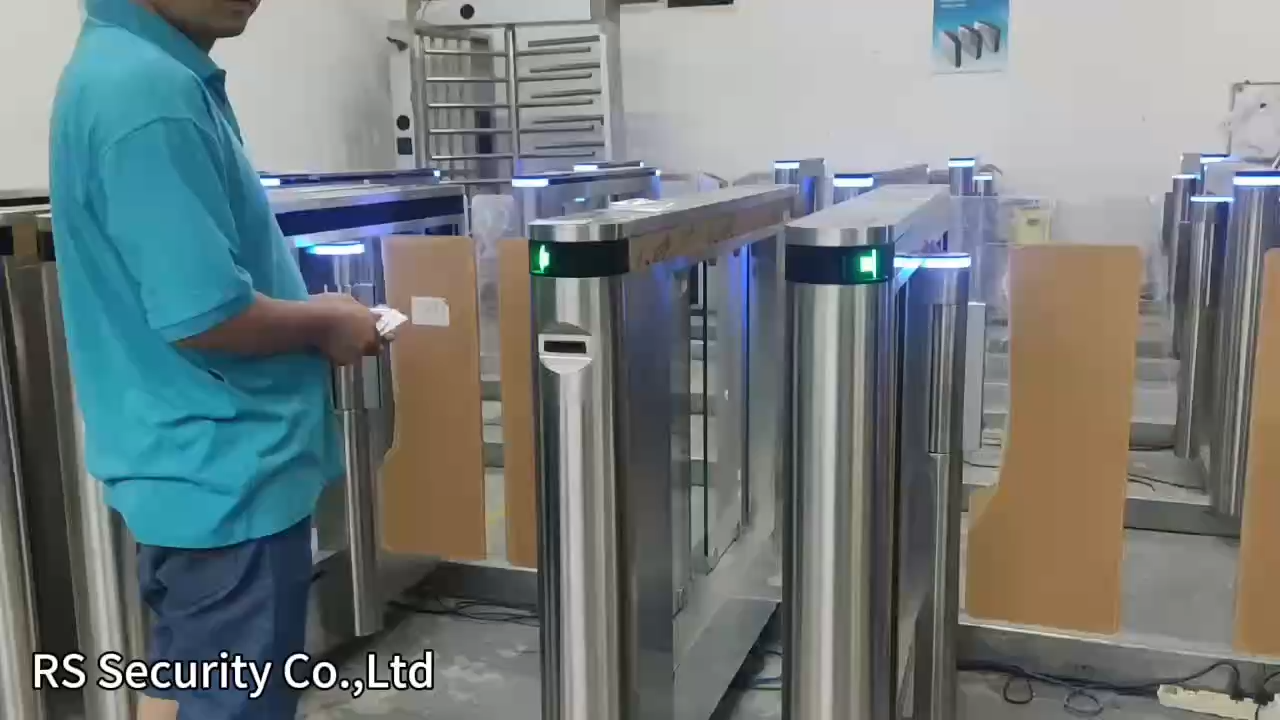
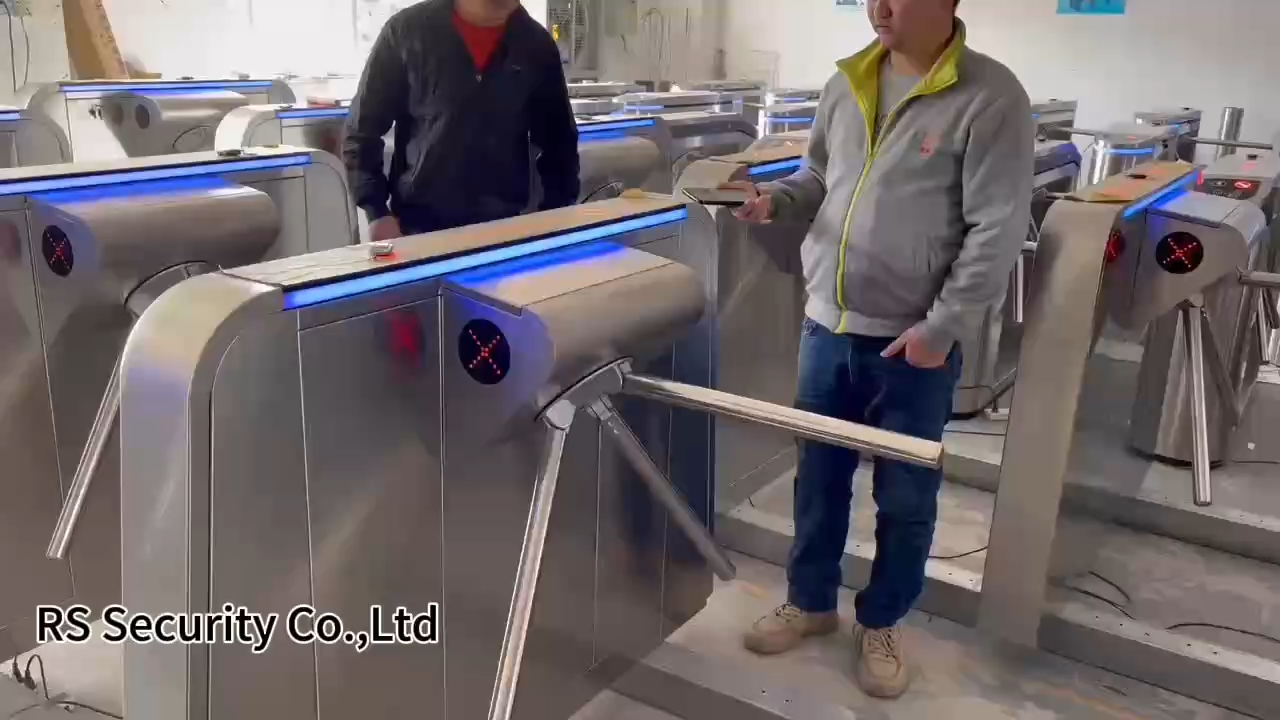
Advanced facial recognition can be combined with other biometric recognition technologies, including fingerprint readers, palm vein readers and an IRIS scanner, for enhanced security and flexibility. The device can even be mounted seamlessly onto turnstiles or barriers for seamless integration, connected to PCs for data management purposes and supporting various communication protocols, including TCP/IP, RS232/RS485, Wiegand In/Out and Wireless WiFi.
Dual-Camera for Real-Time Face Detection
Face recognition technology utilizes artificial intelligence to quickly identify and verify people in real time. It has applications across industries including healthcare, security, and access control, allowing patients to quickly check-in at hospitals quickly, employees to verify credentials at events quickly, or monitoring an individual’s emotional state remotely. As it doesn’t store any sensitive information on its devices it provides a more secure alternative than passwords – although integration into existing systems may prove challenging due to high-quality images being required for proper verification as well as slow processing speeds.
Facial recognition begins when cameras detect human faces in front of them and this data is then sent through to a machine which checks if this person matches a template saved previously, and if confirmed will display an alert to notify that person that his/her entry into restricted areas has been verified quickly and prevented – making this method ideal for airports and other secure spaces.
Contrary to other face detection models, this new dual-camera system can recognize faces at various angles and distances – even while wearing masks or other coverings. Two HD cameras capture both color and black-and-white images to complete its recognition capabilities.
Color and black and white images are sent to a face recognition processing unit for analysis, which then selects one candidate based on predetermined rules and displays it on a screen so the user can identify who they’re trying to recognize. This technology marks a great advance for facial recognition.
RS Security Co’s Jetson Li powers this dual-camera facial recognition terminal with an impressive capture volume for both IR and visual facial recognition at distances up to 2.0 meters from subjects-to-devices, providing advanced body temperature screening as well as access to a vast onboard face template database with support for multiple languages.
3 in 1 Verification with Fingerprint & RFID
This facial recognition smart terminal can be utilized in access control, time attendance and human verification applications. Equipped with fingerprint scan and RFID card reader features, the terminal allows for three forms of user verification: face recognition, fingerprint and card key access and PIN code access verification. Furthermore, the facial recognition technology even works when wearing masks or with eyes closed – perfect for schools, hospitals or environments requiring high levels of security such as schools.
The Linux-based Hybrid Biometric Access and Time Attendance Terminal offers comprehensive biometric identification capabilities with facial and palm vein recognition for rapid identification. With its touchless recognition technology ensuring hygiene concerns are eliminated while simultaneously improving security performance in every aspect. Furthermore, its ultimate anti-spoofing algorithm effectively protects it from fake photos or videos attacks to guarantee safety and reliability of operation.
RS 800E5 features an IPS high-end screen and innovative hand tracking techniques to ensure angle tolerance of +/-60 degrees in the roll axis. Equipped with up to 6,000 palm templates and powered by 1.4GHz quad-core CPU, this touchless access control and attendance system is suitable for office, school, hospital, airport, condominiums and factories alike.
It is an all-in-one biometrics identification device featuring face recognition, palm vein scanning, QR code reading and iris scanning – designed to meet COVID-19 requirements for fast, accurate and secure verification. Equipped with dual cameras with computer vision built-in for accurate tracking of movement of people and prevention of spoofing through comparison of live image with pre-registered faces database; device also comes equipped with basic cloud attendance software SDK API for easy customization and integration.
Fast Speed Dynamic Face Recognition
Dynamic Face Recognition Technology utilizes an advanced facial recognition algorithm and 5-inch IPS high-end touch screen. It supports multiple verification with fingerprint and RFID verification as well as dual cameras for real-time face detection with recognition speeds less than one second, suitable for access control, time & attendance and door guarding applications.
Face recognition may involve a feed-forward mechanism similar to that described for object categorization, with higher visual areas recruited through ventral pathways (perirhinal cortex and temporal pole) being involved. Furthermore, neural processes involved may be slower; an estimated lower behavioral bound for recognition speed has been reported at between 360-390 milliseconds (Kalaska and Crammond 1992; VanRullen and Thorpe 2001b).
Linda et al. (2011) conducted an experiment where participants had to recognize famous faces among unknown ones in a rapid go/no-go task, taking approximately 260 milliseconds on average for participants to complete this task.
To assess whether this finding holds, we conducted experiments utilizing similar conditions and stimuli as Linda et al. 2011, yet with participants performing tasks under tight time constraints in order to avoid pre-activating feature recognition processes. To test this hypothesizing further, participants were made perform tasks under time constraints of one minute per task in order to prevent pre-activation of recognition features occurring before time was up – in other words no pre-activation of feature recognition occurred at all during these tasks.
Participants were required to perform a rapid go/no-go task that involved recognising two unfamiliar faces within a short interval of time, on average taking 360-390 milliseconds (ms). This result is significantly faster than Linda et al.’s lower behavioral bound of 360ms; hence it seems reasonable that their lower behavioral bound on recognition speed represents neuronal processing limits rather than simply lower behavioral bounds.