Biometric Reader Bridge Tripod Turnstile
Access rotate tripod turnstile gates offer cost-effective entrance control solutions, featuring card or fingerprint readers to manage both entrance and egress.
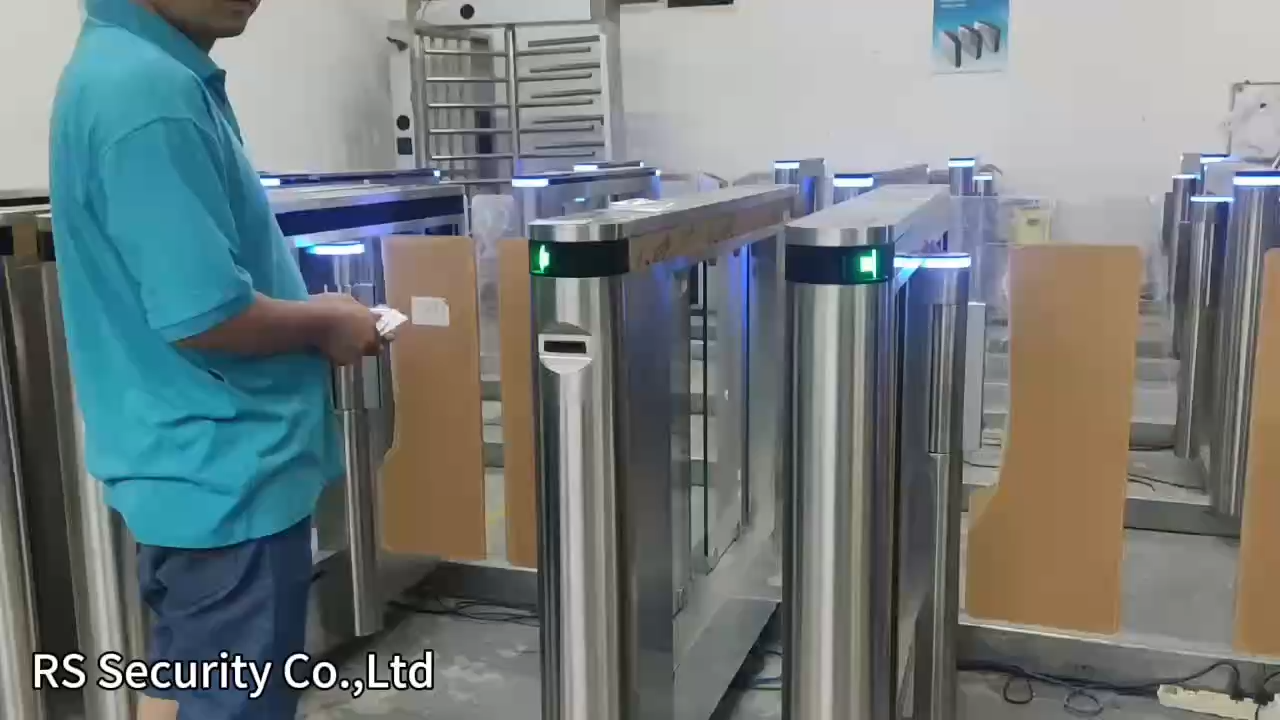
Flap barriers are composed of either plexiglass or tempered glass for its blocking body, with metal plates wrapped around special flexible materials to reduce pedestrian injuries. Their top cover can be opened easily for accessing their mechanics and connections.
Optical Turnstile
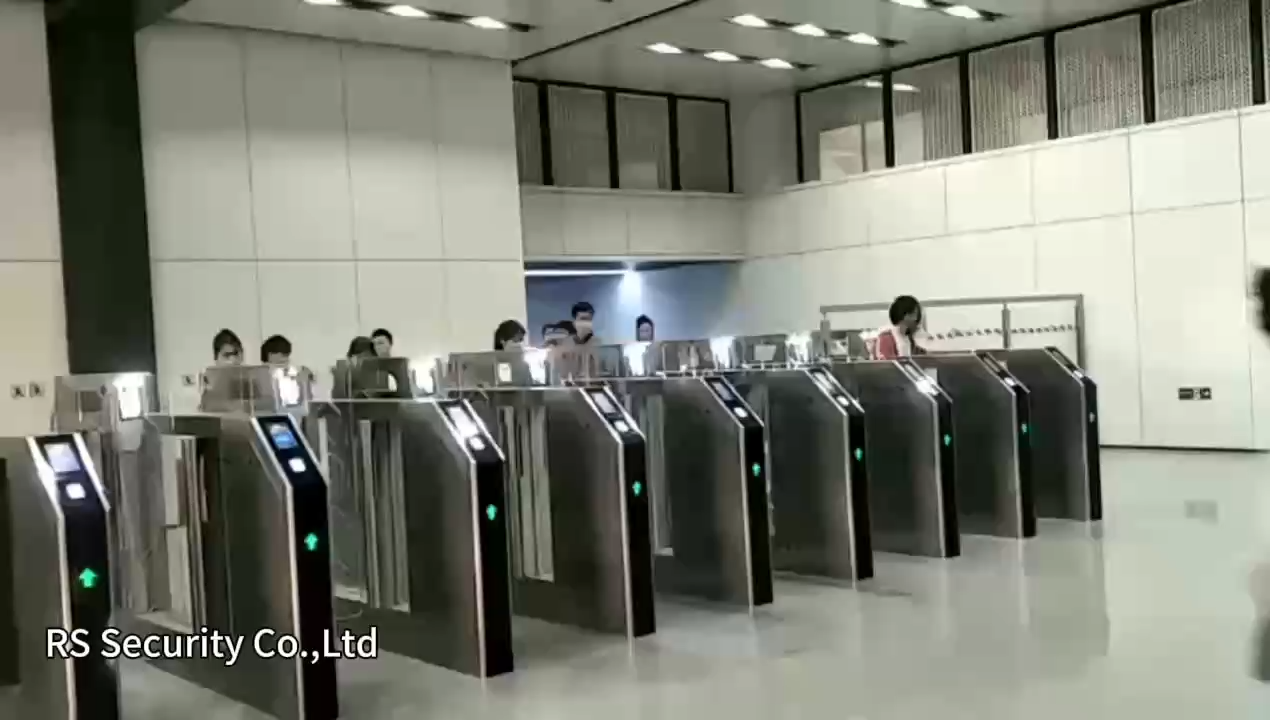
Optical turnstiles employ optical sensors to manage and monitor people entering secure areas, eliminating the need for physical barriers while permitting high-speed access through one lane. Furthermore, these types of rotate gate turnstiles alert security staff of unauthorised entry attempts while being equipped with sensors capable of detecting tailgating, collusion, non-entry or obstruction; some even come equipped with 1/4″ tailgate pressure sensors capable of distinguishing humans from objects which prevent users from climbing over pedestals.
An rotate gate optical turnstile comprises five main parts, such as its cabinet, three sticks, mechanism, control module and auxiliary components. Typical turnstile cabinets are usually constructed of stainless steel; their gate wing may be constructed from either plexiglass or tempered glass for durability and safety purposes. Depending on its model, its mechanism can either be fully automated or semi-automatic and come with various alarm methods including LED indicators or voice prompting alarm systems.
Users must present an ID card or proximity reader, swiping their valid card to initiate verification before passing through. The system then opens its arms for passage if their card is valid; otherwise a continuous buzzer will sound to indicate any attempted unlawful entry attempt. Furthermore, turnstiles provide pedestrians with direction information so they follow the appropriate route.
RS 918-1 optical turnstiles are state-of-the-art devices designed to combine security with sleek aesthetics for building lobbies. Maintaining similar levels of security to half-height turnstiles, they utilize active infrared beams that form an invisible electronic field between two pedestals to replace physical barriers with infrared sensors which detect tailgating, collision and non-entry and activate an audible alarm to notify security staff of these activities.
Optic turnstiles offer more than traditional access control systems; they can also be integrated with security and business management software to enhance security and efficiency at your facilities. For instance, card readers connected to rotate gate optical turnstiles allow you to automate cancellation of passes for anyone failing to enter within an allotted period of time.
Biometric bridge turnstiles can also integrate with facial recognition software to verify the identity of visitors to your facility, increasing security while decreasing false ID cases.
Access Turnstile
Use of access control systems to manage turnstile entrances and exits can help secure buildings against identity theft, fraud and other security breaches. From office environments, banks, data centers or factories – biometric reader bridge rotate gate tripod turnstiles provide an efficient yet cost-effective means of controlling access for individuals through reading fingerprints, facial features or unique traits such as eye color; installation is quick and operation easy while real time monitoring allows security personnel to quickly review security issues that arise quickly.
Turntiles come in various types, ranging from full height models to waist high models that can meet the unique requirements and budget of any business. Waist-high models are best suited for commercial spaces and gyms while full height options provide maximum security at government facilities, stadiums, and industrial sites. Waist high models are particularly suitable for gyms while full height options provide maximum protection in government facilities, stadiums, and industrial sites. In addition to increasing security these turnstiles help protect revenue streams by preventing unauthorised entry. Only paid customers gain entry; many are also compliant with ADA guidelines so those with mobility impairment can pass safely through easily and safely.
Rotate gate turnstiles can also be included as part of your access control system, with infrared sensors used to detect and verify authorized users, providing a more secure and modern alternative. They may be fitted with one reader for managing both access and egress or two for controlled entry with free exit.
Biometric reader bridge tripod turnstiles can be configured with anti-tailgating features for added security, distinguishing between multiple individuals attempting to enter simultaneously and one authorized individual, preventing any other unauthorzied people from accessing the building while still allowing authorized persons through; alerting security if attempts are made at breaking security are detected.
Biometric reader bridge tripod turnstiles can also come equipped with an anti-tailgating feature and power loss drop arm feature, allowing them to automatically lower and unlock doors during an emergency or fire evacuation. Furthermore, visitor card collectors are available that record and store visitors’ identities or credentials for future verification.
Semi-Automatic Turnstile
Biometric reader bridge turnstiles increase security by only permitting authorized personnel into facilities. Easy installation and integration with various access control and biometric reader technologies makes these security-focused tripod arm turnstiles an economical solution for high security needs.
Semi-automatic turnstiles utilize either one motor or two electromagnets to lock and unlock for both entry and exit directions, with valid credentials being recognized by electromagnetic drive releasing blocking rod gently as user push through it gently either direction. They also feature fault self-inspection capabilities as well as anti-reverse functions to avoid pedestrian retrograde traffic flow.
These turnstiles can be equipped with various forms of identification verification technology, such as boom code cards, ID cards, fingerprint recognition and facial recognition. These systems can be used for access control and attendance management in stations, wharfs, tourist attractions, exhibition and convention centers, communities as well as factories or enterprises etc.
Semi-automatic tripod turnstiles offer many advantages over manual ones, including low current consumption and lower operating costs. This is due to disconnecting its mechanical locking function for home positions during unpermitted passage mode; this drastically cuts energy consumed by solenoids consuming energy in turntile operation, providing for greater durability as well as lower operating costs.
Other advantages of this type of turnstile include its ease of operation and maintenance. Repositioning, reset and activating it is made easy using its built-in adjustable tensioner that controls rotation force to avoid over-rotation; only light pressure needs to be exerted on its arm for activation – making it suitable for even elderly or child users to use! Furthermore, its auto-rotate function automatically resets them back to their initial idle positions after no motion has been detected for a predetermined period.
Tripod turnstiles come with many standard features that can be further customized, such as LED display and biometric reader interface. Furthermore, this model can also be fitted with additional options, including LED displays and biometric reader interface. Water-resistant devices allow this tripod turnstile to be installed anywhere from offices to stadiums – an added feature making this ideal for military facilities and government offices that require high levels of security protection.
Manual Turnstile
Manual turnstiles are simple barriers with no electronic components that limit access in only one direction. Operating these full-height turnstiles requires no power source and only permits users to pass once their credentials have been validated and matched against an access system database. They are commonly found at transit stations, stadiums or amusement parks due to their ease of use and ability to be integrated easily with additional access control systems for increased security.
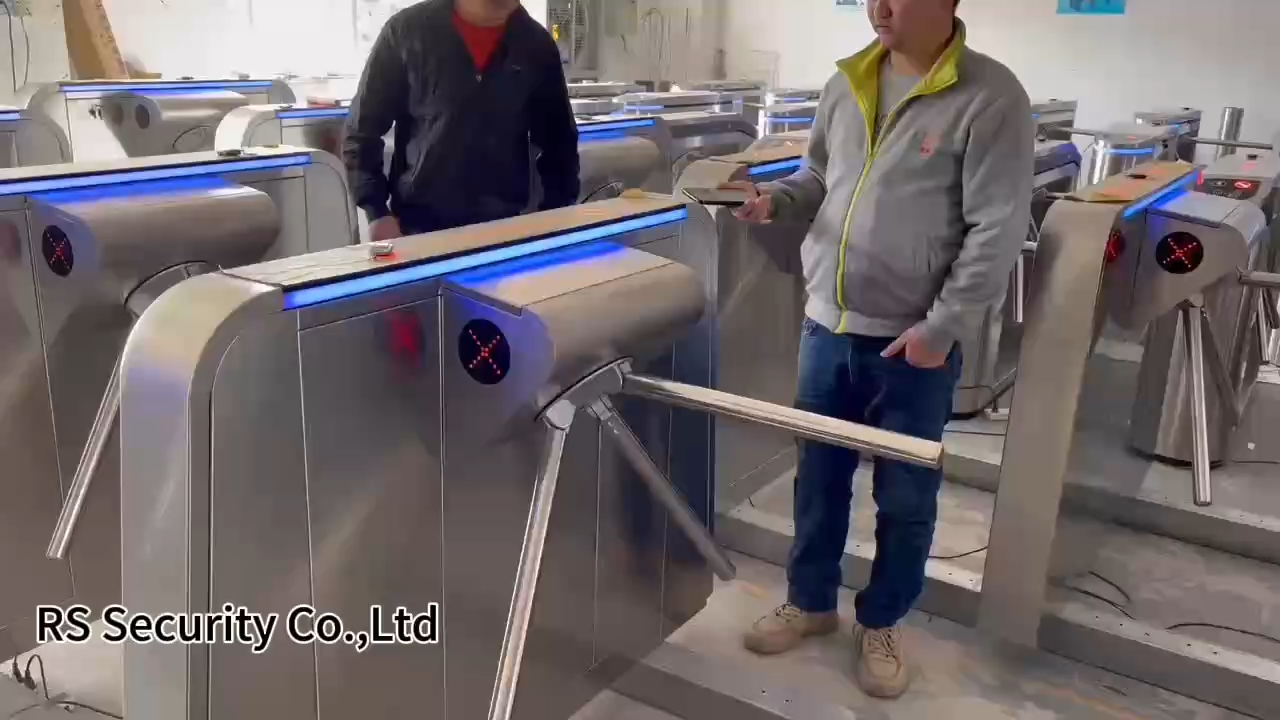
Tripod turnstile gates feature readers to manage entry or exit and can be driven manually, semi-automatically, or automatically. They may be configured as bi-directional gates that allow only free egress. They may be fitted with two readers that manage both entry and egress simultaneously or one reader that only monitors access; alternatively they may even feature settings to lower their barrier arm in case of power lockdown or fire alarm alert to allow free passage.
Access control turnstiles feature clear covers to prevent unapproved access, stainless steel bodies and rugged designs that can withstand heavy traffic volumes. They’re also easy to install and require little maintenance; often used as part of an overall access management system with an iris scanner or barcode reader to verify credentials and ensure no unwelcome individuals gain entry.
As their name implies, bridge-type tripod turnstiles feature rotating arms in a triangular formation reminiscent of bridge arches, creating entry lanes when locked and blocking passageways when unlocked; making it very difficult for unapproved persons to gain entry or leave your site without first being verified as authenticated users.
These access control systems also include features to prevent tampering, such as double interlocks with anti-tamper and tamper-proof sensors or the capability of detecting invalid card swipes to block passage, while some models also come equipped with an audible alarm when someone attempts to pass.
Tripod access turnstiles are specifically designed to manage pedestrian traffic efficiently at a cost-effective price point, while providing verification services at the same time. They’re easy to maintain, can be operated manually or manned by an attendant, and serve as an economical means of protecting buildings against unwarranted ingress and egress – especially useful in busy locations where monitoring people closely is key.