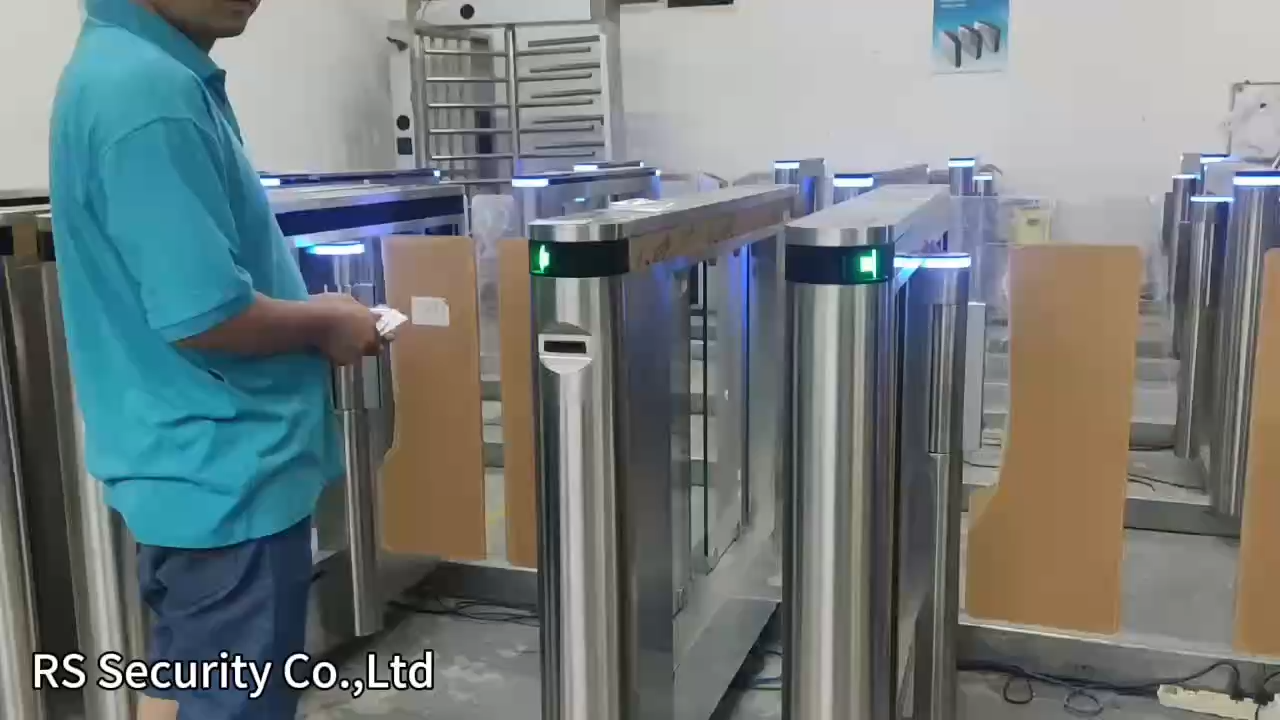
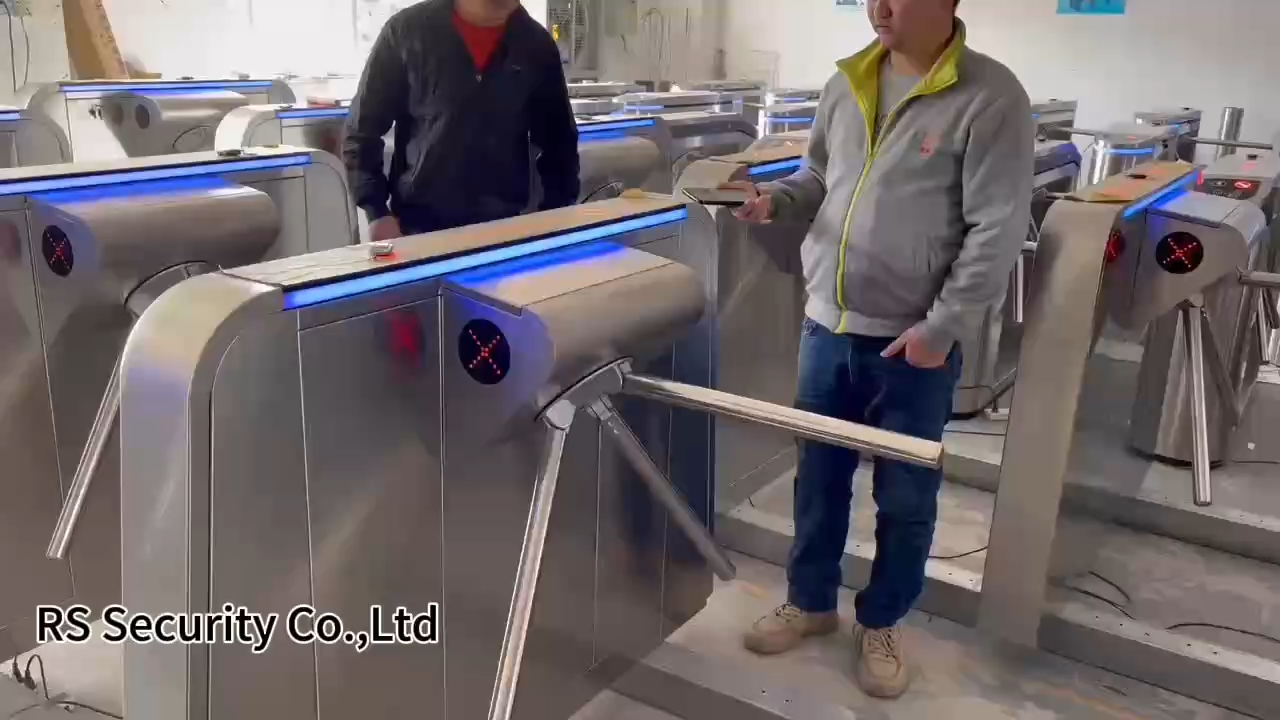
The Installation and Maintenance of Vertical Glass Arm Swing Turnstiles
A entry swing gate turnstile is an access control equipment typically employed in situations requiring wide channels such as community schools, factories, docks, subways or scenic spots.
This type of barrier gate features the widest channel width among all available products – typically between 550mm – 1000mm for standard products, but may even reach 1500mm with high-end upgrades. Furthermore, they boast excellent anti-tailing capability.
Design
Comparative to tripod turnstile gates, swing gates offer superior security levels and are better suited for large crowds. Furthermore, when necessary they can quickly retract into their box when necessary to improve speed of passage and facilitate pedestrian evacuation.
A swing turnstile equipped with optical sensors is also equipped to detect tailgating and collision, and notify security staff as a result. For these reasons, optical turnstiles have become popular choices in office buildings, shopping malls, railway stations, airports and scenic spots alike. Furthermore, as it requires no physical barriers – making aesthetics an important consideration – it makes this turnstile suitable for places such as office buildings where aesthetics is key.
This type of turnstile gate offers wide channel width for easier passage for people using strollers or luggage as well as those with disabilities. Additionally, it integrates seamlessly into various access control systems including RFID card readers, QR code reader devices, face recognition software systems and remote setting of more than 10 kinds of flexible configuration gate modes including normally open/normal closed, reverse direction/fire control modes.
Control of the wing gate turnstile is more complex and costly. Meanwhile, its chassis of the flap barrier gate is relatively single and plasticity is poor; additionally it does not meet waterproof specifications, and can be damaged easily through illegal punching and impacts.
To overcome these issues, wing gates are equipped with anti-pinch technology which prevents the blocking rod from being manually lifted by pedestrians, thus ensuring it does not clip pedestrians. Furthermore, it features an auto delay closing feature allowing it to remain open for some time after activation.
A swing turnstile constructed of brushed stainless steel 304 or 316 is not only beautiful, but it also helps create an integrated design within your facility. Designed to integrate seamlessly with access control systems such as CCTV and whole building management systems to safeguard business operations and ensure maximum protection for staff and customers.
Functions
The chassis of a turnstile is an integral component, providing protection for internal components like the turnstile mechanism and control module as well as providing access control management functions by controlling operation/stopping of turnstile mechanism as well as opening/closing blocking rods when necessary to restrict people passing unintended directions. Furthermore, chassis can also be equipped with additional security devices to ensure personnel safety in emergency situations.
Swing turnstiles are gate-style structures that rotate in one direction and only permit one person through at any one time, such as public transportation stations or stadiums with high security needs. Their barrier acts as an additional layer of defense, deterring people from jumping the turnstile or entering through its back entrance; additionally, these devices often work well alongside other security technologies such as face recognition or biometric scanners for greater effectiveness.
This type of turnstile comes in both waist high and full height models, with waist high models having arms located on the right-hand side when viewing from outside, while full-height versions feature arms on the left side when facing them from within. This design makes them suitable for managing entry and exit while still allowing people to pass quickly through gates.
The optical swing turnstile is an intelligent system capable of being integrated with various identity recognition equipment such as an IC card, magnetic card, bar code scanner, ESD tester and fingerprint reader. Additionally, third-party readers like RFID or biometric readers may also be connected. Furthermore, more than 10 gate modes can be set: controlled mode, free passage normal forbidden fire fighting return to normal can all be programmed into its programming for seamless use.
Optic swing pedestrian turnstiles offer numerous advantages for saving space, such as their compact size that allows installation in tight places. Furthermore, it helps prevent tailgating by providing more effective passage control; additionally its beautiful appearance and unique design are hugely appealing; in addition, an LED indicator light strip makes the system even more desirable and luxurious.
Installation
Before installing a swing barrier turnstile, it is vitally important to conduct a comprehensive site survey. This involves assessing its installation location as well as factors like pedestrian traffic flow and accessibility. Furthermore, power sources and network connections should be nearby and turnstile gate units should be secured onto the floor using floor markings on their bases – then it should be tested to make sure everything works as intended. Once complete, testing should occur to make sure everything works smoothly.
Swing barrier turnstiles are easily integrated with various identity recognition system equipment, such as magnetic cards, bar code cards, IC cards, ID cards, QR codes, fingerprint and face scanners to enable intelligent channel management and control for large enterprises and institutions, public places like shopping malls or airports. This makes the turnstiles ideal for access control management of personnel entering and leaving large enterprises as well as airports.
Comparative to other turnstile gates, optical swing gates offer higher security and reliability. Their complex mechanical design requires greater complexity but provides enhanced anti-tailing capacity and anti-collision features – perfect for high-end occasions like lobby areas of buildings, railway stations, subway stations and scenic spots.
Optic swing gates can be equipped with four pairs of infrared sensors to ensure pedestrians’ safety and security during passage. These sensors should primarily be located at the gate entrance, sector of wing rod and gate exit to maximize accuracy and flexibility of movement. Furthermore, proximity between sensors could result in false detection causing injuries to pedestrians.
Maintenance
Maintenance of a full height swing turnstile requires checking for physical damage and verifying the correct functioning of its internal mechanisms, including inspecting chassis, wiring connections and sensors. Maintaining these components properly ensures optimal performance and longer service life as well as regular exterior cleaning to maintain its pristine condition and protect it against dirt, dust, or any environmental conditions.
First step to ensure the correct functioning of a full height turnstile is inspecting its mechanical parts, such as its blocking rod and strike plate. Any damaged pieces should be immediately replaced, while it’s also important that all rotating arms and components are aligned correctly; additionally, regular lubricating should help avoid wear-and-tear issues in its mechanism.
Full height turnstile maintenance involves regularly testing its sensors and detectors. These devices detect movement within the lane to detect whether anyone attempts to enter or exit it; they can be programmed either to emit an audible alarm for unauthorised entry or remain silent if authorized access has been granted. Full height turnstiles also offer optical beam sensors that detect when someone has entered or left its area of coverage.
Finally, it is recommended that regularly cleaning the chassis and electrical connections of a turnstile. Use a brush or cloth to clear away any accumulated dust or debris from its mechanism, while checking screws that connect it with its motor and rotating arm for looseness; tighten them as necessary.
As well as performing routine maintenance on the turnstile, it is also a wise idea to follow the manufacturer’s recommendations for operation and maintenance of it. Doing so will help avoid any potential issues during use; specifically it is advised that users avoid squeezing or rubbing the arm during card reading or fingerprint scanning, which can damage equipment. Furthermore, standing or leaning against its wings or rods when gates are open should also be avoided.