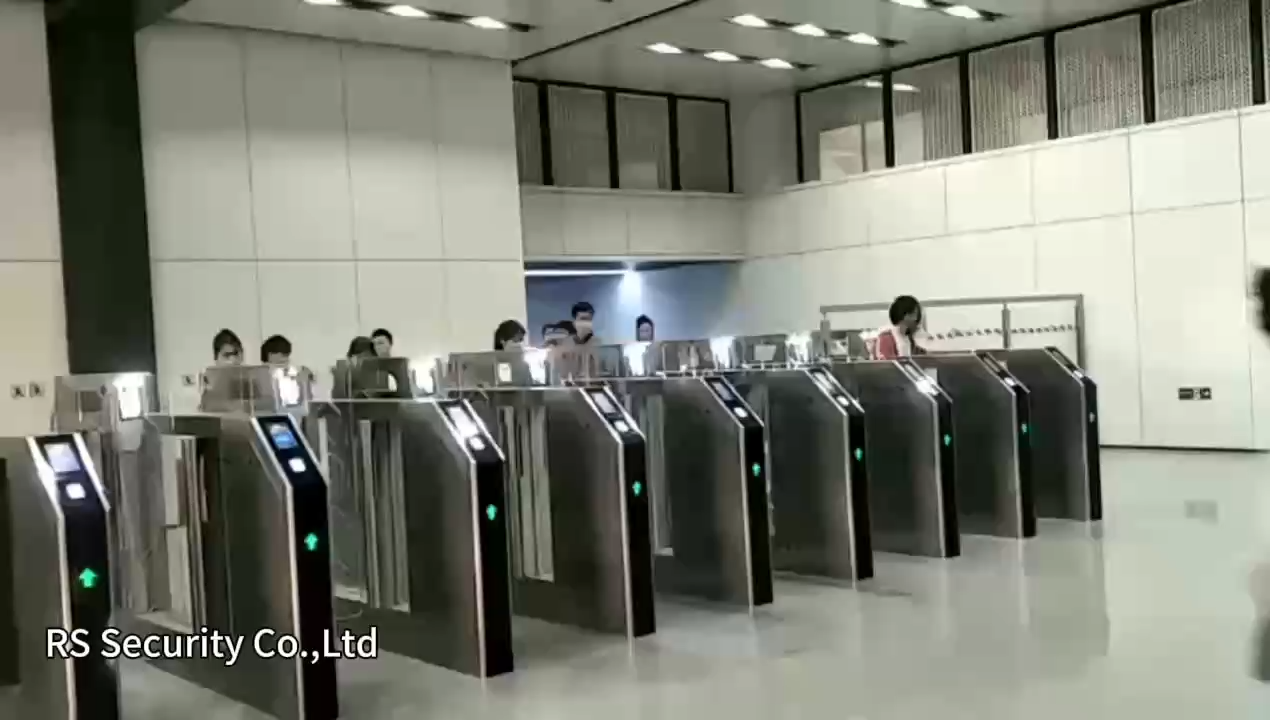
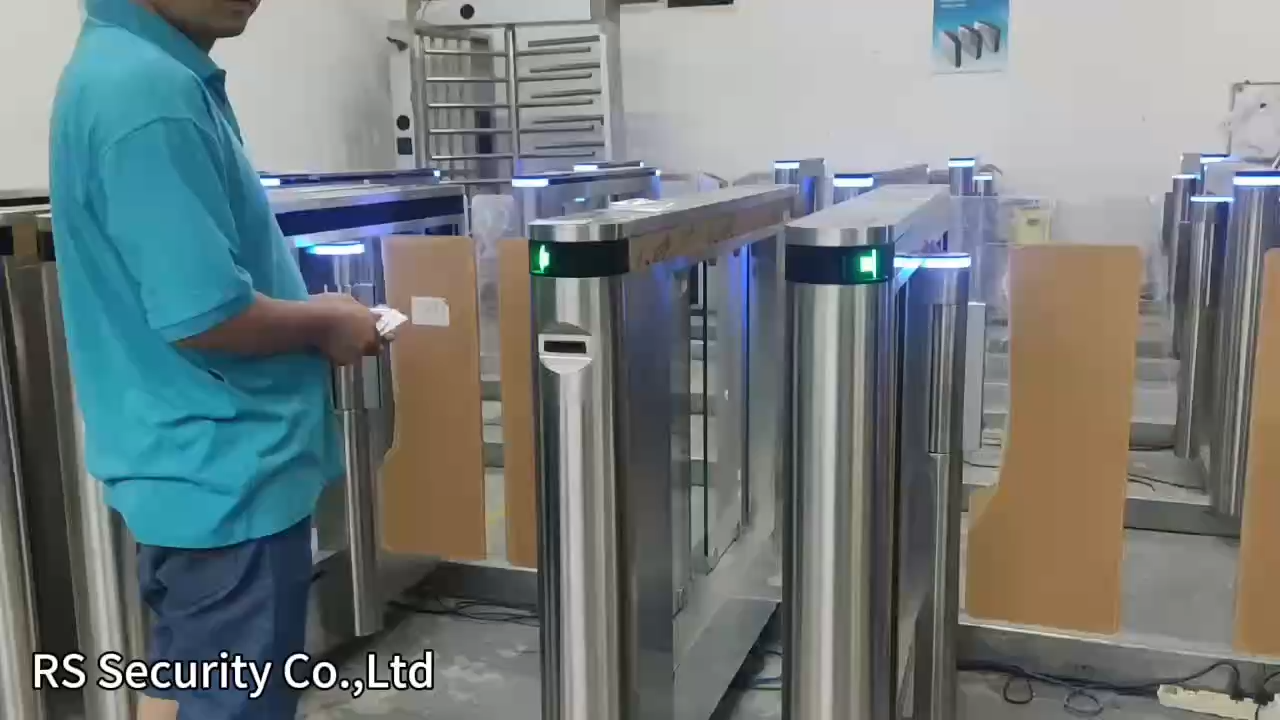
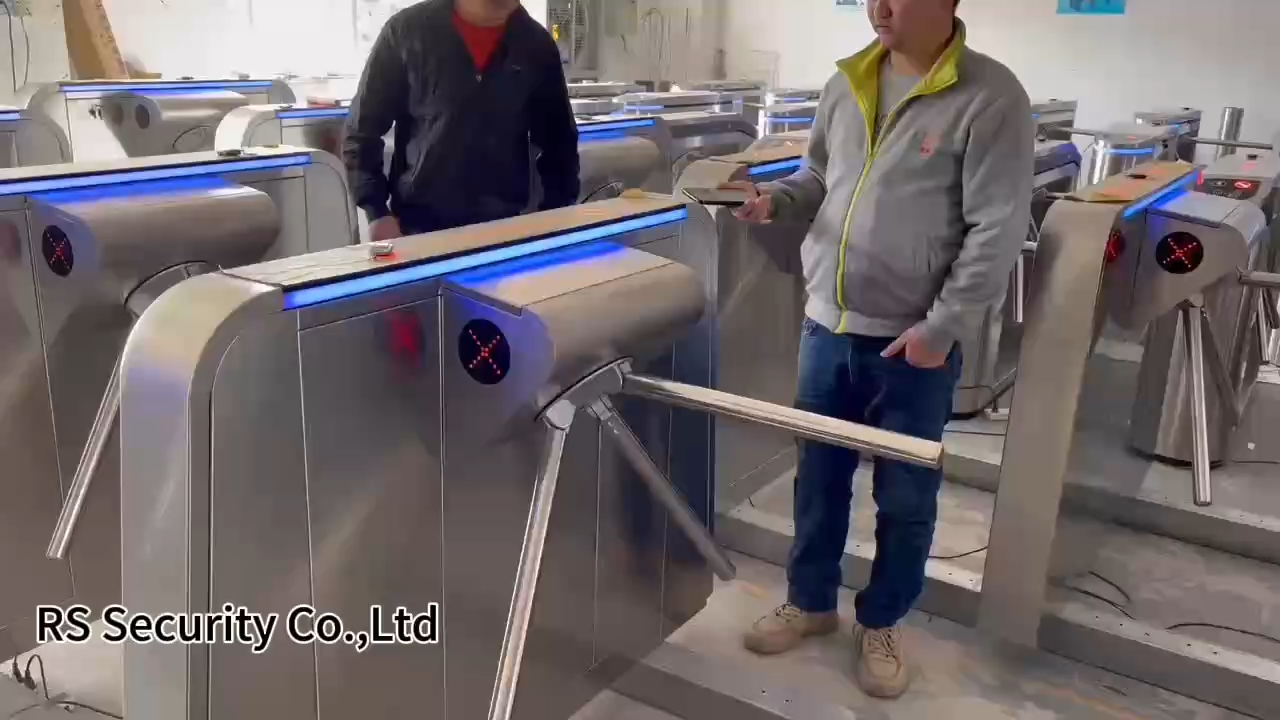
The Subway Station Slim Swing Turnstile
The subway station slim swing turnstile is a high-quality access control system designed for passenger entry and exit. Among its many advanced features is an anti-tailgating data analysis function to prevent tailgating of passengers entering or leaving.
The MTA installed new metal shields at several turnstiles at a Manhattan subway station to prevent fare beaters, but amNewYork Metro reporter Briella Tomassetti observed numerous riders easily breaching these barriers and pass through.
Security
Subway turnstiles are an indispensable component of subway systems, helping prevent fare beaters and ticket fraudsters by controlling pedestrian flow and only allowing one person to pass at once. They may be equipped with other security measures such as biometric identification, barcode scanning, QR code recognition or facial recognition for enhanced security, reduced costs and greater efficiency.
The MTA has recently undertaken several tactics to deter turnstile jumpers. This includes installing so-called “subway spikes” at certain turnstiles on Lexington Avenue line and crescent-shaped metal shields at others. Unfortunately, fare beaters remain common within New York’s subway system despite these measures; using revolving gates may provide effective deterrence but require frequent maintenance and can create long queues; increasing operating costs by hiring additional employees can also cause delays.
Metro turnstile gates feature an advanced anti-tailgating data analysis function to detect any instances of tailgating during passage and prevent unauthorised personnel from following authorized individuals through. They also feature channel indications, ticket information displays and alarm sound and light prompts – making them highly reliable tools that can be applied across a variety of applications.
The subway station slim swing turnstile is ideal for use in high-traffic areas like office buildings and transportation terminals, made of durable yet high-quality material to withstand frequent usage. Its compact size and design make installation in limited spaces quick and simple while being highly efficient with smaller footprint and shorter running times than revolving gates.
Subway station slim swing turnstiles can also be integrated with other systems to strengthen security and provide an exceptional user experience. Furthermore, they’re cost-effective solutions for businesses and transit agencies looking for entrance protection, helping avoid bottlenecks that might otherwise create negative user experiences.
Convenience
Optical swing turnstiles employ optical sensors to identify passengers before granting entry. This feature prevents unauthorised access and tailgating while increasing security, while simultaneously providing direction information to other security systems.
Devices designed to facilitate entry control for authorized personnel only are an ideal choice in commercial environments like office buildings, hospitals and public areas where security is of the utmost importance. Their ease of integration makes them ideal for areas that prioritize protection such as IC card systems, fingerprint recognition devices or face recognition technologies that ensures entry control only to approved personnel.
Subway turnstile gates can verify passenger identities and conduct ticketing checks to increase safety in subway stations and trains, eliminating the need for employees to manually check tickets at platforms or inside carriages – thus saving on labor costs and saving money in labor costs. Furthermore, these turnstile gates record passenger entry/exit information which helps manage data analysis while improving efficiency in subway operations.
Each project or location has different security requirements, which is why it’s critical to identify the appropriate number of turnstiles required. Installing sufficient turnstiles ensures smooth pedestrian flow and minimizes congestion or bottlenecks while contributing to environmental security overall.
At scenic spots or airports, for example, passage numbers are determined based on environmental and demand considerations – peak periods, holidays etc – which ensures an accurate estimation of tourist numbers without disrupting traffic flow.
Comparative to other forms of turnstile gates, full height swing turnstile gates provide more passengers and vehicles through due to their larger passageway and superior barrier deterrent. They may also come equipped with infrared anti-clamping or mechanical anti-clamping for pedestrian safety as well as supporting identification technologies such as IC cards, fingerprint scanners or face recognition technologies.
Appearance
Subway station slim swing turnstiles not only offer security but also add aesthetic value. This high-performance gate can support multiple card reader devices simultaneously while offering two-way traffic flow in either direction and has an automatic fail-safe design that opens automatically in case of power loss. Their sleek, space-saving design fits in easily into any environment and they come in various colors and finishes to complement the style of any building.
The Metropolitan Transportation Authority (MTA) of New York City is taking measures to deter fare beaters at subway stations across New York. Recently, crescent-shaped metal shields were installed on some turnstile gates at subway stations as a deterrent against fare beaters entering without paying. These measures should make entry more difficult.
Another new measure will involve providing real-time service information on digital screens before passengers enter turnstiles, making their commute more pleasant and helping them avoid having to rush towards trains. Furthermore, MTA will replace its traditional subway map with an information display fixture or “totem.”
Apart from improving security, this modern access control solution is also effective at managing crowd flow at airports, subway stations, and other busy venues. It integrates seamlessly with IC cards, barcode scanners, facial recognition technology and other access control systems; additionally it features a sleek appearance and humanized design to ensure continuous smooth operation around-the-clock.
Slim swing barrier optical turnstile gates offer more stylish appearance and faster passage speed compared to standard bridge-type tripod turnstile gates. Their sleek plexiglass barriers come in various lengths for different needs and they can even be upgraded with more secure options like tempered glass for additional security. Access can be gained using an ID card swipe; two-way traffic support and sturdy construction make these reliable investments last over time.
Maintenance
Subway turnstiles are devices designed to manage pedestrian flow, ensuring only one person passes at any one time through them. They identify passengers through various identity recognition systems like card swiping, document scanning, barcode/QR code recognition or biometric recognition – increasing security and traffic efficiency while improving traffic efficiency. They’re also equipped with numbering systems so it is easier to track passenger numbers and statistics.
The MTA is taking steps to prevent subway turnstile jumping with crescent-shaped metal shields installed recently on select turnstiles, following “subway spikes” being placed at Lexington Avenue line stations. These shields aim to deter turnstile jumpers by discouraging them from trying to pass through barriers without paying their fare.
Station equipment is an integral component of subway services and thus subject to great strain during peak hours, making the maintenance schedule optimization of key equipment an important issue for subway operation companies. A station’s capacity depends heavily on its equipment being reliable; any failure could potentially delay passenger flow significantly.
Therefore, the subway station slim swing turnstile is built to withstand heavy use and wear and tear, as well as its sleek design being pleasing to look at while being easy to maintain and repair. Furthermore, it boasts triple anti-pinch and anti-tailgating control functions to guarantee passersby’s safety.
Maintaining a subway turnstile requires regular care and maintenance. Lubricating its gates with oil, keeping spare parts on hand, and having an on-site technician assess and solve any problems quickly are all effective strategies for maintaining optimal functionality of this equipment.
Subway turnstiles have multiple applications, from enterprise and office attendance systems, supermarket and shopping arcade consumption systems, access control management of smart residential homes and smart apartment complexes, ticket checking management at subway stations and scenic spots as well as construction site sites – to palm-shaped systems management. Subway turnstiles provide highly reliable access control solutions that are easily integrated into multiple systems and environments – operating smoothly regardless of any environment without complications – cost effectively replacing other solutions while offering improved reliability.