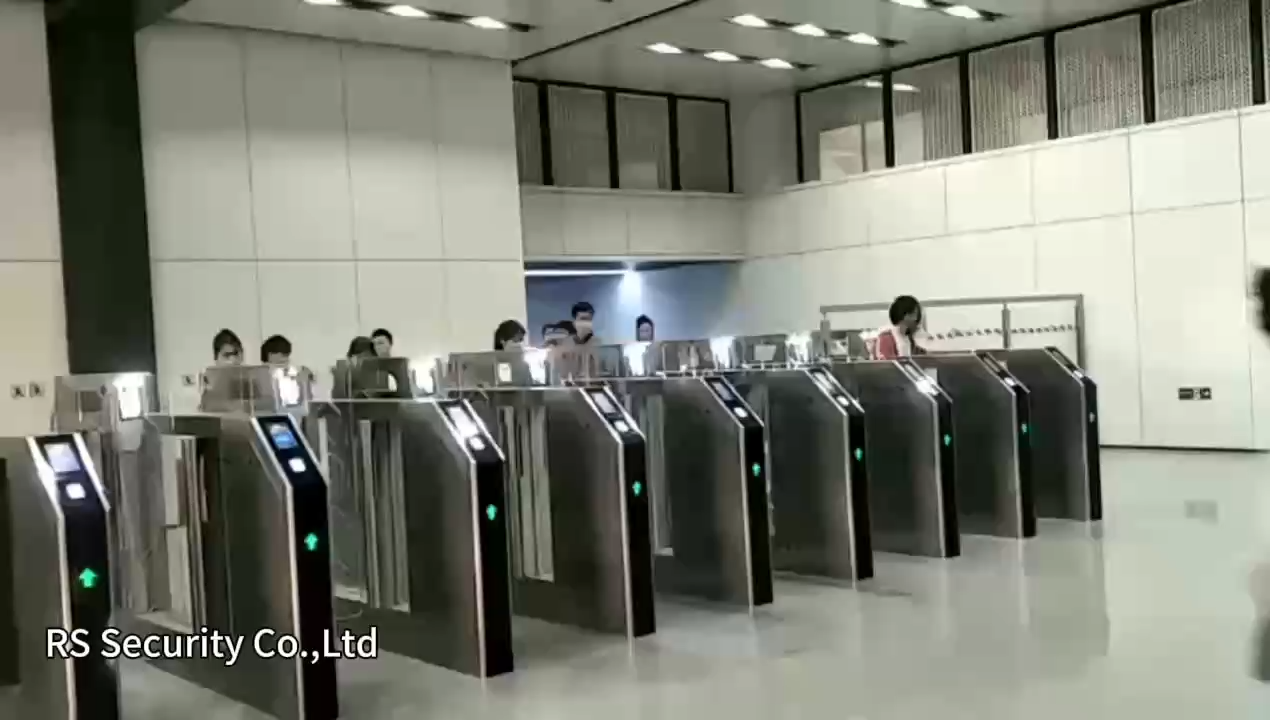
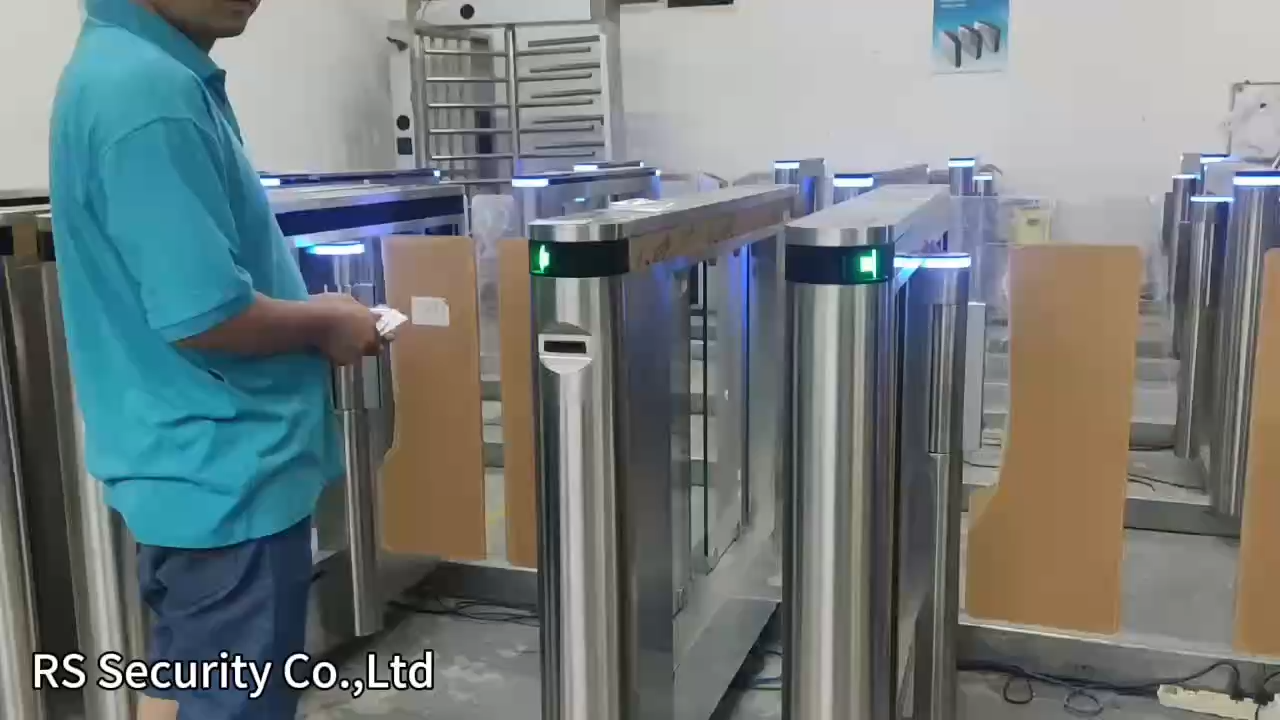
RFID Card Outdoor Used Speed Gate Turnstile
RFID Card outdoor used speedstiles turnstile gate is a high-performance access control system designed to allow only authorized individuals through. Its sleek design minimises waiting times while being easily integrated into existing systems.
A centralized control system monitors each turnstile’s operation in real-time, providing timely responses to security breaches or malfunctions and analytics reports on how best to use each speedstiles turnstile.
Optical Sensors
Speedstiles turnstile optical sensors convert light into digital signals that can be processed by their hardware, then interpret that signal to determine whether there has been any change by looking for reflections or interruptions of a light beam emitted by diodes in the sensor itself. This technology enables it to detect a variety of objects, including humans. Furthermore, they are immune from electromagnetic interference and can tolerate high temperatures.
Optic sensors are an ideal choice for areas that demand high levels of security. Their flexible installation makes them an easy, reliable solution that any business or organization can rely on; furthermore, optical sensors offer advantages other sensor technologies simply can’t compete with.
These sophisticated sensors enable real-time monitoring of access, preventing security breaches and providing swift responses in case of violations. Furthermore, these sensors recognize different credentials to access specific areas, increasing security while decreasing wait times and waiting times.
Optic sensors are more cost-effective than their electrical sensor counterparts, offering much lower installation and deployment costs while being versatile enough for deployment across a variety of conditions. Furthermore, optical sensors utilize fiber-optic technology instead of expensive copper wires, thus further cutting costs and speeding up installation time and costs.
Optics combined with RFID readers can also be utilized to efficiently verify credentials at speedstiles, providing an easy way of making sure the correct credential has been presented for scanning. If an invalid credential is presented for scanning, however, an alert will either be displayed visually or audibly announced preventing entry through those gates.
Infrared Sensors
Infrared sensors power this speedstiles turnstile, featuring anti-pinch technology for user safety. Furthermore, its automatic reset function cancels previous user authority if they don’t pass through in a set period of time; additionally it includes sound and light alarms, including anti-trespassing alarms and tailgating alarms, to deter unauthorized access. Finally, this cylindar speed gate can easily be customized according to specific needs, such as integration of card readers or biometrics systems.
Speedstiles turnstile feature robust mechanisms designed to withstand even the harshest environmental conditions, making them ideal for high traffic areas like airports, stadiums and office buildings. Furthermore, they operate smoothly and quietly for optimal user experience with advanced sensors ensuring reliability even under adverse lighting and weather conditions.
Turntiles come equipped with emergency protocols that open barriers in case of an emergency such as fire. Regular testing should ensure that these protocols function as intended.
Turntiles provide a range of designs to complement the aesthetics of any installation site, including finishes, materials and barrier types such as sliding, retractable or swinging barriers. Turntiles can also be integrated with other security systems like CCTV and alarms for a comprehensive solution that reduces costs by decreasing manual oversight as well as increasing security through accommodating technologies like facial recognition or multi-factor authentication into existing systems.
Radio Frequency Identification (RFID) Cards
RFID stands for Radio Frequency Identification, an electromagnetic technology that uses electromagnetic fields to uniquely identify objects. RFID tags contain microchips with antennae that transmit and receive radio waves to communicate with RFID readers (which may be handheld devices or fixed units at entry points), who then interact with them by emitting radio waves that activate and store information such as a unique ID in their memory chip, which are read out from handheld readers or fixed units at entrance points by handheld readers releasing radio waves that activate tags which then transmit data backend systems for verification.
RFID can have numerous applications in retail and beyond, from inventory tracking and supply chain management to self-checkout and product movement through warehouses. Retailers like Amazon use RFID tags for completely self-checkout as well as to track products as they move through warehouses; this enables customers to purchase items online before picking them up at nearby stores for faster and more convenient delivery; in turn enabling retailers to better manage stock levels across locations while helping prevent product recalls by monitoring where and when items were sold granularly.
Speedstiles turnstiles employ RFID cards and sensors to monitor access in real-time, minimizing unauthorized entry while responding promptly to security breaches. They’re ideal for office buildings and stadiums where large volumes of people need to flow quickly through entrances; additional authentication methods like biometrics or QR codes can further strengthen security by verifying credentials before granting entry.
Many speed gate turnstiles are also designed to make access easier for people with disabilities. They typically include user-friendly interfaces, clear instructions and indicators that indicate accessible lanes; some models even incorporate anti-tailgating sensors to stop unauthorised individuals from following authorized users too closely; some can even be managed centrally via a central system which simplifies maintenance while providing reports on usage and performance.
Magnetic Cards
Speed gate turnstiles use magnetic cards instead of optical or infrared sensors to identify those entering high-traffic areas, like airports, train stations and stadiums. With their sleek designs allowing faster passage through times and eliminating security breaches these turntiles make an excellent solution.
Entrance gates feature a movable barrier and secured storage for RFID credentials. Furthermore, each gate contains a first processing unit which reads digits from each credential to generate a hash value before transmitting to its associated RFID reader for comparison against the first list – any credential not matching can be blacklisted by that reader.
RFID card access control turnstiles are popular because of their ease of operation and seamless integration into existing systems, without costly modifications or additional hardware being required for integration. This makes them ideal for organizations searching for an easy yet cost-effective solution to control access to their building or event; additionally, these turnstiles can easily expand as their needs dictate.
Swiping turnstiles is designed to be user-friendly and accommodating of a range of people – children and the elderly alike. This makes them suitable for use across an organization without costly biometric methods that may be difficult to use for some individuals. Direction indicators on gates assist users in knowing which direction they should swipe their card while continuous alarms prevent unauthorized passage. They can be configured either for controlled passage or free passage operation and the system regularly conducts self-checks and alarms for quick detection of hardware issues.
Biometrics
Biometrics utilize biological data to recognize and authenticate people, typically for security, surveillance or personalization purposes. These biometrics could include fingerprints or facial patterns to keystrokes, gait or eye movements.
Speed gate turnstiles with built-in biometric readers can be used to verify a user’s identity via access card scan, facial recognition or fingerprinting methods, among others. This enables more precise identification and verification for reduced errors and fraud; furthermore, biometric systems can be designed to accommodate future technologies that become available.
When a user presents their credential at a reader, the system first communicates with its database to check for validity – this process should occur almost instantaneously, avoiding delays in user flow. If valid credentials have been presented, the system signals to its turnstile mechanism to open its barriers – these barriers may be sliding, swinging or retractable depending on your model of turnstile.
Emergency mode allows the system to automatically open barriers in response to fire alarms or other emergencies, providing greater protection for employees and visitors in such instances.
Some models of speed gate turnstiles include features such as user display screens and audio messages to assist users during the process, wider lanes for people with disabilities and features that meet accessibility standards. Furthermore, certain models integrate seamlessly with other security systems like CCTV or alarms for seamless integration and an overall comprehensive security solution – helping organizations manage their security infrastructure more easily.