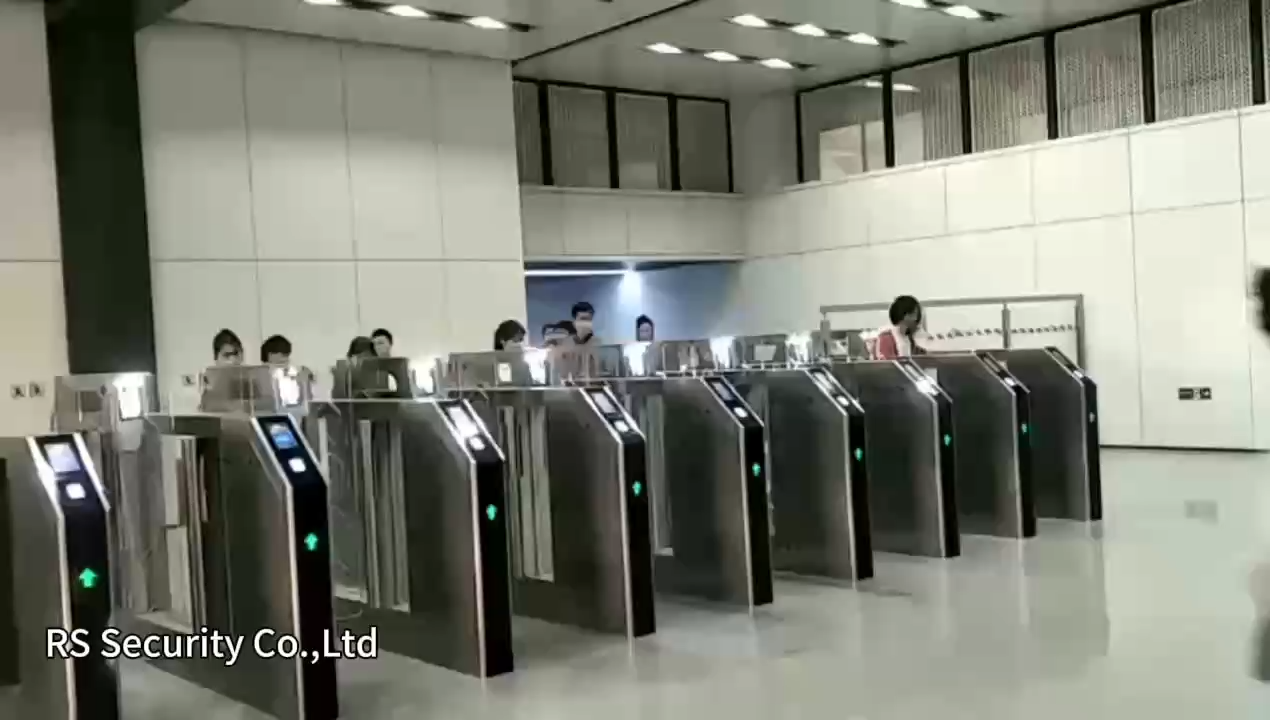
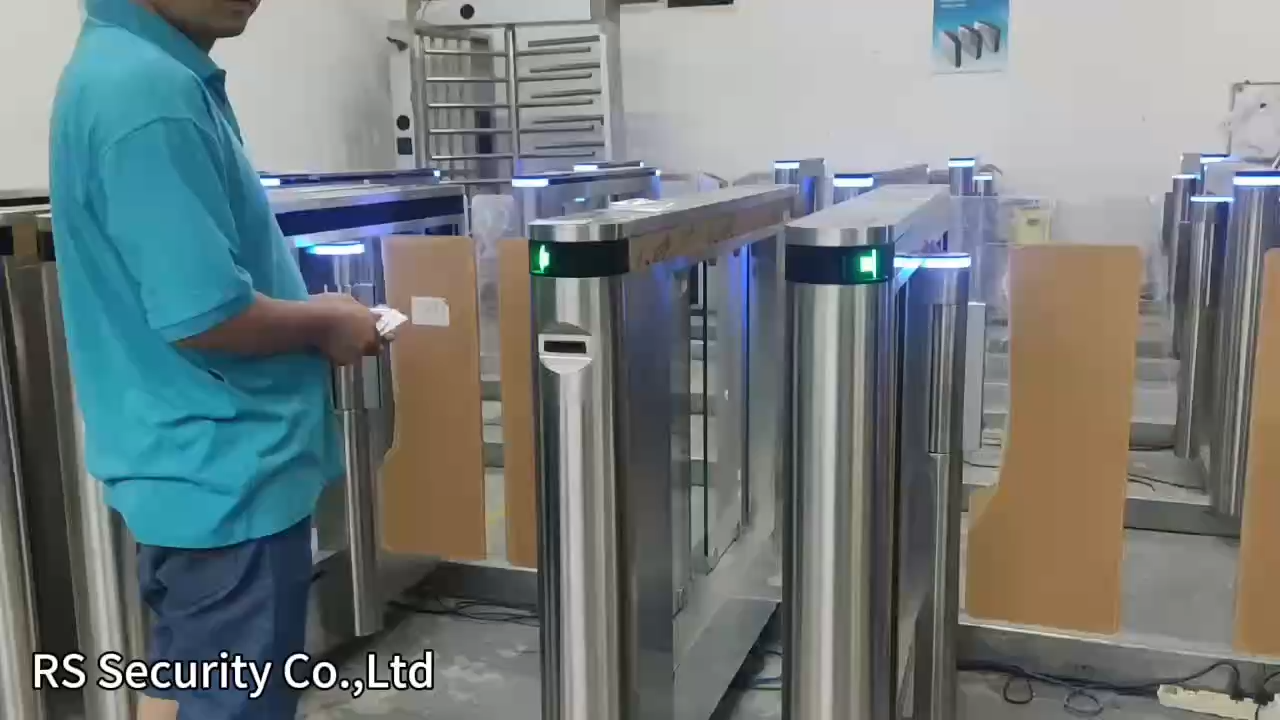
Card Sweep Speed Gate Turnstile For Hospitals
Hospital speedgate turnstile gate systems are an effective and secure means of managing individuals who enter or leave building entrance and exit passageways, and ensure security standards by demanding strict identity verification through various modes and signal interfaces.
Integration of mobile artificial intelligence and 5G technology enables faster, more accurate identity verification – relieving medical staff from stress while increasing entry management process efficiency.
Optical Turnstiles
Optical turnstiles offer an inconspicuous yet secure alternative to physical barriers in hospital lobbies, providing access control without being intrusive or intrusive. These self-service portals feature two cabinets set apart that together form a passage lane connected by invisible infrared beams that detect movement and verify credentials; should anyone attempt to pass without authorization, a visible or audible alarm will activate.
Optic security entrances provide healthcare facilities with sleek and attractive entrances that complement modern aesthetics, unlike the metal gates found on traditional turnstiles. One key benefit of optical security entrances is their ability to track people exactly in speedgate turnstile lanes, helping prevent unauthorised entry or tailgating and can even integrate above-the-glass IDS devices for monitoring attempts to scale barriers or tamper with them.
Optical turnstiles can be configured for controlled or free access, accepting various credentials such as barcodes, magnetic stripes, proximity cards and biometrics. Furthermore, they can be installed with ADA gates to accommodate wheelchair users or mobility vehicle visitors as well as integrated with building management systems to keep an accurate count of people within a building at any one time; this provides many benefits including energy efficiencies and safety improvements during a fire evacuation where information sent directly to blue light services will enable them to immediately find the area most in need of help.
Pedestrian Gates
As part of an integrated visitor system, pedestrian gates provide hospitals with an effective means of controlling unauthorised entry and exit and increasing security. Visitors may enter through the speedgate turnstile with QR codes, face recognition machines or ID cards; staff will receive alerts if someone attempts to pass without being authorized; furthermore pedestrian gates include emergency alarm functions which open them automatically in cases such as fire.
Full-height models feature an additional blocking barrier that makes it more difficult for unapproved individuals to climb over or squeeze through a turnstile gate, making these models suitable for hospitals and other public areas with heavy traffic volumes. Furthermore, these can be equipped with various access control features such as face recognition, fingerprint/palmprint recognition, RFID reader and even face/palmprint reader capabilities for added protection.
The card swipe speedgate turnstile’s scanning technology enables individuals to enter and exit smoothly with its user-friendly process. Its centralized management software provides an efficient means of overseeing its features, activities and memory storage capacities. Furthermore, remote monitoring enables detection of any abnormalities such as intrusion attempts or malfunctioning card readers; and anti-tampering features help protect it against unwarranted use or manipulation by unauthorzied individuals or manipulation; for optimum results it is suggested individuals swipe their cards at an optimal height to ensure effective sensing capabilities and prevent malfunctions or intrusion attempts by unauthorised people or manipulators attempts.
Integrated Access Control Systems
Hospitals benefit greatly from implementing an integrated security system(speedgate turnstile) to increase operational efficiency and enhance safety. With such systems in place, staff can track visitors, limit access to drug storage areas and equipment areas, respond quickly to unauthorized entry with alarms or locking mechanisms, meet regulatory compliance requirements for patient privacy protection, safeguard assets and maintain emergency preparedness by alerting people when an evacuation occurs while keeping doors locked.
Hospitals can enhance their physical security with various solutions ranging from cloud-based security systems, which use cabling and wireless technologies, to more advanced multifactor authentication processes to combat threats of unauthorized entry. This may include biometric authentication solutions where someone must place their finger on a reader or type in a code before unlocking devices with smartcards; biometric readers require people to place their fingerprint on it while typing the code is also an option.
Speedgate turnstile come equipped with directional indicators to ensure pedestrians pass through in an orderly fashion for safe passage through. Depending on security needs, they can be set for controlled, free or prohibited passage; additionally they come equipped with various interfaces to facilitate seamless integration with other external devices and unifying management, making operation and maintenance simpler. Infrared sensors can detect illegal intrusion as well as any problems; while their reset mechanism provides fast recovery in case of forceful impact or tampering.
Real-Time Monitoring
Turnstile gates with sensor arrays monitor passageway activity in real-time to ensure only authorized individuals pass. This feature is particularly beneficial in high-security facilities like hospitals where patient and staff safety is of primary concern.
When the turnstile gate recognizes valid credentials, it sends a signal to open its barriers – this may involve sliding, swinging or retracting glass or metal barriers depending on its model of turnstile gate; other verification technologies might include ID cards, QR codes, fingerprint scanner devices or facial recognition systems to verify credentials; additionally many speed gate turnstiles feature anti-tailgating sensors to stop unauthorised individuals from following behind an authorized user.
Once a user presents their credentials at the turnstile, its system checks it against a database to ensure its legitimacy. If any credentials presented are invalid, an alert will be sent out alerting them of this fact as well as potentially disallowing their permission to enter.
Integrated access control systems enable security teams to efficiently administer user entry privileges from one central location, streamlining administrative processes while decreasing management costs and operational inefficiencies. In addition, integrated turnstiles offer greater scalability to accommodate future expansions within their security infrastructures. These integrated turnstiles also integrate seamlessly with CCTV cameras, alarms, visitor management systems and visitor management platforms, creating a unified security ecosystem with increased monitoring capabilities as well as data sharing between components.
Anti-Tailgating
Hospitals and healthcare facilities face the daunting task of providing their patients with an inviting yet secure experience. In order to do this, they must ensure that only authorized personnel enter the building – something which may prove challenging when visitors arrive in large groups; that is where anti-tailgating comes into play.
Tailgating is a widespread security risk that affects all access control systems, which involves multiple people entering a restricted area when only one has valid entry credentials. This practice poses health risks to employees and guests as well as complicate insurance claims processes.
One effective solution for tailgating is using an integrated turnstile system with anti-tailgating capabilities. Turnstile gates integrate seamlessly with visitor management systems that offer automatic visitor registration and smooth visitor tracking; additionally, such systems can manage employee attendance, overtime hours worked and leave requests as part of mitigating security risk.
Card swipe speed gate turnstiles can help prevent tailgating by restricting access to one person at a time into restricted lanes. Once someone presents their credentials, when someone without valid entry token attempts to pass without being authorized by staff it is detected as tailgating and the gate closes immediately – this feature protects facilities while decreasing security risk even in high-traffic areas.
Sleek Appearance
Turnstiles can be an efficient means for controlling access control systems in various situations. They are commonly employed in public environments like hospitals to manage entrance and exit processes for staff and visitors.
There are various types of turnstiles, including flap barrier gates, swing barrier gates, and full-height turnstile gates. All are intended to enhance the appearance and increase security of your building by preventing people from climbing over them. Some even come equipped with face recognition or fingerprint scanning technology that helps prevent germ spread while improving employee and visitor management in hospitals.
Flap barriers offer more elegant design and are easier to use compared to other security turnstiles, making them the ideal solution for use in smaller spaces such as corridors or offices without taking up too much room. Furthermore, they can be equipped with face recognition software, QR codes and multiple access cards to meet customer demands and reduce tailgating risks quickly and accurately. Furthermore, fault self-test and alarm functions help ensure safe operations of your turnstile system.