Overview of the AB Barrier Turnstile RS 716-UC-9
The RS 716-UC-9 is a specialized high-performance barrier turnstile designed specifically to meet the strict access control requirements of modern airport security systems. This advanced system ensures the safety and efficiency of passenger flow.
This barrier turnstile serves as a core physical access control facility. It is deployed across airport terminals, restricted operational zones, boarding gate passages, and security checkpoints.
It integrates advanced biometric verification, ID document recognition, real-time data synchronization with airport security management platforms, and anti-tailgating detection technologies.
It forms a critical first line of defense for airport personnel and passenger flow management.
Core Functional Advantages for Airport Scenarios
Multi-dimensional Identity Verification Compatibility: Supports seamless integration with passport scanners, boarding pass QR code readers, facial recognition cameras, and airport staff access cards, enabling 1-second fast identity matching and passage authorization that effectively reduces passenger waiting time at security checkpoints during peak travel hours.
Industry-leading Anti-intrusion and Anti-tailgating Performance: Equipped with 12 pairs of high-precision infrared sensors and intelligent algorithm analysis modules, it can accurately identify unauthorized tailgating attempts within 0.2 seconds, trigger immediate barrier locking and on-site alarm, and transmit abnormal event data to the airport security command center in real time, completely eliminating the risk of unrelated personnel sneaking into restricted security zones.
High Durability Adapted to High-flow Operation Scenarios: Made of 304 brushed stainless steel housing and reinforced anti-collision barrier arms, the RS 716-UC-9 supports more than 10 million stable opening and closing operations without failure, fully adapting to the 24-hour uninterrupted high passenger flow operation environment of large international hub airports that serve tens of millions of passengers every year.
Irreplaceable Role in Airport Security System
Unlike ordinary civilian access turnstiles, the RS 716-UC-9 barrier turnstile meets the civil aviation security certification standards of multiple countries.
This system can track all personnel’s access records at key airport passages.
It can realize full-link traceability of all personnel’s access records at key airport passages, helping airport security management teams quickly locate personnel movement trajectories in emergency situations.
Its modular design can be quickly connected with airport security inspection systems and border control systems.
This forms a coordinated and efficient security management closed loop.
Implementing these systems reduces operational costs associated with security personnel.
This functionality is crucial in data-sensitive environments where breaches can lead to severe consequences.
Examples of Turnstile Applications
Barrier turnstiles have become increasingly popular in various sectors beyond airports, including theme parks, stadiums, corporate offices, and public transportation hubs.
For instance, in theme parks, barrier turnstiles control entry to ensure that only paying customers gain access, which enhances safety and operational efficiency.
Similarly, in stadiums, they help manage the flow of thousands of fans entering the venue at once, maintaining order and security.
Moreover, corporate offices are adopting barrier turnstiles to enhance employee safety and track attendance.
For example, companies can integrate these systems with employee identification cards, ensuring that only authorized personnel can access sensitive areas.
This not only bolsters security but also allows for more efficient emergency evacuations if necessary.
In public transportation, barrier turnstiles can prevent fare evasion and ensure that only ticketed passengers board.
Cities worldwide have implemented such systems to maintain revenue integrity and streamline passenger flow.
In major cities like New York and London, barrier turnstiles are prevalent in subway stations.
Implementing barrier turnstiles can significantly enhance security measures in various settings.
For instance, in high-security environments such as data centers, barrier turnstiles can restrict access to authorized personnel only, logging each entry and exit meticulously.
This functionality is crucial in environments where data breaches can lead to severe consequences.
Furthermore, schools and universities are beginning to utilize barrier turnstiles to monitor access to campuses, especially during events where large crowds gather.
This measure ensures the safety of students and staff while deterring unauthorized access during critical times, particularly at schools and universities.
In today’s fast-paced world, ensuring security is paramount.
Barrier turnstiles serve as an effective solution for controlling access and enhancing safety.
They are particularly crucial in environments where large crowds converge, such as airports, stadiums, and outdoor events.
The automation and integration capabilities of these systems allow for a seamless flow of authorized individuals while deterring unauthorized attempts to gain access.
When considering the installation of barrier turnstiles, organizations should assess their specific needs to determine the best type of system for their operations.
Factors such as the volume of traffic, types of identification methods required, and integration with existing security systems are all critical considerations.
By thoroughly evaluating these aspects, organizations can select a barrier turnstile solution that aligns with their security goals and operational requirements.
By evaluating these aspects, organizations can select a barrier turnstile solution that aligns with their security goals.
The RS 716-UC-9 is a high-performance airport-grade mantrap barrier turnstile tailored for high-traffic, high-security airport access scenarios. Designed with durable aviation-grade materials and intelligent access control logic, it delivers reliable anti-tailgating performance while ensuring smooth passenger flow, perfectly meeting the strict security and efficiency requirements of airport terminals, international arrival/departure corridors, and restricted area access points.
Passenger Throughput Specification
The passenger throughput of the RS 716-UC-9 airport mantrap barrier turnstile is calibrated for peak airport operation scenarios: under normal verified single-passenger access mode, it supports a stable throughput of 30 to 35 passengers per minute. For scenarios with pre-validated fast passage (such as pre-registered e-gate channels), the maximum throughput can reach up to 42 passengers per minute, far exceeding the average throughput of conventional standard turnstiles. This throughput performance effectively cuts down passenger queuing time during airport peak hours, while its built-in dual-door interlock mantrap structure ensures no security loopholes are introduced during high-flow operation.
Key Application Advantages
- Supports seamless integration with airport ID verification, boarding pass scanning and biometric recognition systems
- Comes with IP65-rated waterproof and dustproof housing suitable for semi-outdoor airport access zones
- Equipped with emergency automatic unlock function to ensure unobstructed passage during evacuation scenarios
RS 716-UC-9 AB Turnstile Entrance Gate: All-Inclusive Product Overview and Step-by-Step Installation Manual
The RS 716-UC-9 AB Turnstile Entrance Gate is a high-performance heavy-duty barrier turnstile engineered for high-traffic commercial, industrial, and public access scenarios, including office building lobbies, stadium entry points, factory personnel access zones, school campuses, and public transport station platforms. As a state-of-the-art access control barrier turnstile, it combines robust anti-trespass structural design, intelligent access verification compatibility, and low-maintenance operation, supporting bidirectional AB access mode that strictly separates entry and exit flows to eliminate cross-traffic confusion, prevent unauthorized tailgating, and deliver 24/7 reliable access management for sites with daily visitor volumes ranging from 500 to over 10,000 people.
Pre-Installation Preparation Checklist
Before you begin the formal installation process for the RS 716-UC-9 AB turnstile entrance gate, complete the following preparation steps to avoid construction delays and ensure long-term stable operation of the barrier turnstile:
- Confirm the installation site has a flat, solid concrete foundation with a minimum bearing capacity of 1500kg per square meter, no obvious ground settlement or unevenness exceeding 2mm across the turnstile mounting area.
- Verify that the reserved power supply socket near the installation position provides 110V/220V 50/60Hz stable alternating current, with a dedicated 16A overload protection circuit to prevent unexpected power outages that may damage the turnstile control board.
- Gather all required installation tools, including a 12mm impact drill, M12 expansion bolt set, level ruler, digital multimeter, insulating electrical tape, Phillips screwdriver set, and rubber sealing gaskets for outdoor installation scenarios.
- Unpack the RS 716-UC-9 turnstile main body, fixed baffle components, access control wiring harness, user manual, and installation accessories, and check that no parts are missing or damaged during transportation.
Step-by-Step Installation Process for RS 716-UC-9 AB Turnstile Entrance Gate
Proceed with the installation strictly following the standardized workflow below to ensure the barrier turnstile meets safety and performance specifications:
First, mark the mounting position on the pre-prepared concrete foundation according to the dimension diagram in the official product manual, ensuring the distance between two adjacent RS 716-UC-9 turnstile units is no less than 1200mm to reserve sufficient passing space for pedestrians with luggage or mobility aids. Place the main turnstile body on the marked position, adjust its horizontal level with the level ruler, then drill 8 matching holes for M12 expansion bolts, knock the expansion bolts into the holes, and tighten the nuts firmly to fix the main body to the ground.
Next, complete the internal wiring connection for the barrier turnstile: connect the power line to the dedicated power access port on the main control board, connect the access control signal line to the reserved Wiegand 26/34 interface, connect the anti-tailging infrared sensor wiring harness to the corresponding signal port, and connect the optional alarm device and remote management system wiring according to actual site requirements. After all wiring is completed, use the digital multimeter to check for short circuits or wrong wiring connections, wrap all exposed wire joints with insulating tape, and arrange the wires neatly in the built-in wiring trough inside the turnstile shell to avoid wire abrasion caused by moving mechanical parts.
Then, install the AB direction identification baffles and the rotating movement components: fix the A-direction entry indicator and B-direction exit indicator on the top of the turnstile shell, install the 304 stainless steel rotating arms on the central movement shaft, and adjust the damping force of the movement to ensure the rotating arms run smoothly without obvious jitter or impact noise.
After all hardware installation steps are finished, conduct a 72-hour continuous test run: power on the RS 716-UC-9 AB turnstile entrance gate, verify that the indicator lights switch correctly when valid access credentials are scanned, confirm that the anti-tailging sensor triggers an alarm immediately when a second person tries to follow within 1 second after the first person passes, check that the turnstile automatically unlocks to allow free passage when the fire linkage signal is triggered, and adjust the response delay parameters to match the actual pedestrian passing speed of the site.
The RS 716-UC-9 barrier turnstile, once installed correctly, can achieve a service life of over 10 years with regular quarterly maintenance, effectively reducing long-term operation and management costs for access control of all types of public and private sites.

Overview of RS 716-UC-10 AB Turnstile Entrance Interlock Door The AB Turnstile Entrance Interlock Door RS 716-UC-10 is a purpose-engineered access control system exclusively designed to meet the rigorous security, efficiency, and compliance requirements of modern airport entrances and exits. Built around the core functions of turnstile entrance management, AB interlock mechanism, airport-specific operation adaptation, […]
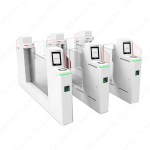
Overview of the AB Turnstile Door RS 916-3 for Customs Security Scenarios
When customs authorities around the world face growing challenges including surging cross-border passenger flow, diversified identity fraud risks, and strict requirements for efficient clearance, the AB Turnstile Door RS 916-3 integrated with high-precision facial recognition scanners has emerged as a game-changing access control solution tailored specifically for customs security check scenarios. As a core product series under the mature AB Turnstile product line, this ab door breaks the functional limitations of traditional customs access control equipment, seamlessly combining biometric verification, intelligent flow management, and high-level anti-tailgating performance to deliver a reliable, high-efficiency security checkpoint experience for both border management teams and cross-border travelers.
Core Advantages of the AB Turnstile Series for Customs Application Scenarios
As a leading brand in the intelligent access control industry, the AB Turnstile product family including the ab door, ab gate, and ab barrier series has long been recognized for its stable performance, customizable functions, and compliance with global border security standards. The RS 916-3 model, as the flagship turnstile product developed for customs security check, inherits all the core strengths of the AB Turnstile product ecosystem while adding scenario-specific optimizations for the unique demands of customs operations. Unlike ordinary commercial access control turnstiles, this ab door is built with 304-grade thickened stainless steel housing that can withstand 24/7 high-frequency operation of more than 1 million passes without structural deformation, perfectly adapting to the peak passenger flow period of international ports where thousands of people pass through each hour. The dual-door interlocking mechanism of this ab gate effectively prevents the common loopholes of traditional turnstiles, such as tailgating, side-by-side passage, and illegal crossing over the barrier, ensuring that only one verified passenger can pass through the checkpoint at a time. The integrated ab barrier module is also designed with soft anti-collision function, which will automatically sense abnormal resistance and trigger a buffer stop to avoid accidental injury to passengers carrying luggage, pushing strollers, or moving with limited mobility, fully meeting the humanized operation requirements of customs checkpoints.
High-Precision Facial Recognition System Optimized for Customs Security Check
The biggest highlight of the AB Turnstile Door RS 916-3 is the embedded industrial-grade facial recognition scanners customized for customs scenarios. Unlike civilian facial recognition devices that are easily affected by environmental factors, the scanner on this ab door is equipped with dual-light (infrared + visible light) imaging modules, which can achieve accurate identity verification even under complex lighting conditions at port checkpoints, including strong direct sunlight, dim indoor light, and backlight environments. Its recognition accuracy rate reaches 99.97%, and the average verification time per passenger is less than 0.3 seconds, which can effectively avoid the long queue congestion caused by slow manual check. This ab gate also supports seamless data interconnection with the local customs identity database, which can automatically compare the collected facial data with the pre-stored passport information, visa records, and border control watchlist in real time. Once the system matches a person on the blacklist, the ab barrier will immediately lock the passage and send an alarm notification to the on-site customs officer, greatly improving the ability of security checkpoints to intercept illegal cross-border personnel. In addition, the facial recognition system also supports liveness detection, which can effectively resist identity fraud methods such as using photos, masks, 3D printed face models, and screen playback, completely eliminating the security loopholes that exist in traditional manual document checking.
Additional Functional Features That Meet Strict Customs Operation Requirements
The AB Turnstile Door RS 916-3 is not only a high-performance access control device, but also a comprehensive intelligent security check workstation. This ab door is reserved with multiple expansion interfaces, which can be connected to customs document scanners, ID card readers, passport MRZ recognition modules, and temperature detection sensors according to actual operational needs. Passengers can complete document scanning, facial comparison, and health status verification all at the same checkpoint without switching between multiple devices, which greatly improves the overall clearance efficiency. The AB Turnstile series also provides a full set of data management background for the RS 916-3 model, which can automatically record all passage data, including the facial image of each passenger, passage time, document information, and verification result. All data is stored in encrypted form, fully complying with global personal data protection regulations such as GDPR, and can be called at any time for traceability and investigation when customs need to review historical passage records. The modular design of this ab gate also makes daily maintenance extremely convenient: each core component including the ab barrier movement, facial recognition scanner, and control circuit can be quickly replaced without professional tools, greatly reducing the downtime of the checkpoint equipment.
Conclusion
For customs authorities that need to balance strict security standards and high clearance efficiency, the AB Turnstile Door RS 916-3 with facial recognition scanners is undoubtedly one of the most cost-effective and reliable access control solutions on the market. With the mature technical accumulation of the AB Turnstile product line, the stable performance of the ab door, ab gate, and ab barrier modules, and the scenario-specific optimization for customs security check, this product has been successfully deployed in hundreds of international airports, land border ports, and maritime customs terminals around the world, helping border management teams effectively reduce security risks, cut down labor costs, and greatly improve the satisfaction of cross-border passengers. If you are looking for a trusted intelligent access control solution for customs security check scenarios, the AB Turnstile RS 916-3 series will be your ideal choice.
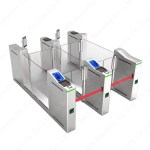
Overview of the AB Turnstile Door RS 916-3 for Customs Security Scenarios
When customs authorities around the world face growing challenges including surging cross-border passenger flow, diversified identity fraud risks, and strict requirements for efficient clearance, the AB Turnstile Door RS 916-3 integrated with high-precision facial recognition scanners has emerged as a game-changing access control solution tailored specifically for customs security check scenarios. As a core product series under the mature AB Turnstile product line, this ab door breaks the functional limitations of traditional customs access control equipment, seamlessly combining biometric verification, intelligent flow management, and high-level anti-tailgating performance to deliver a reliable, high-efficiency security checkpoint experience for both border management teams and cross-border travelers.
Core Advantages of the AB Turnstile Series for Customs Application Scenarios
As a leading brand in the intelligent access control industry, the AB Turnstile product family including the ab door, ab gate, and ab barrier series has long been recognized for its stable performance, customizable functions, and compliance with global border security standards. The RS 916-3 model, as the flagship turnstile product developed for customs security check, inherits all the core strengths of the AB Turnstile product ecosystem while adding scenario-specific optimizations for the unique demands of customs operations. Unlike ordinary commercial access control turnstiles, this ab door is built with 304-grade thickened stainless steel housing that can withstand 24/7 high-frequency operation of more than 1 million passes without structural deformation, perfectly adapting to the peak passenger flow period of international ports where thousands of people pass through each hour. The dual-door interlocking mechanism of this ab gate effectively prevents the common loopholes of traditional turnstiles, such as tailgating, side-by-side passage, and illegal crossing over the barrier, ensuring that only one verified passenger can pass through the checkpoint at a time. The integrated ab barrier module is also designed with soft anti-collision function, which will automatically sense abnormal resistance and trigger a buffer stop to avoid accidental injury to passengers carrying luggage, pushing strollers, or moving with limited mobility, fully meeting the humanized operation requirements of customs checkpoints.
High-Precision Facial Recognition System Optimized for Customs Security Check
The biggest highlight of the AB Turnstile Door RS 916-3 is the embedded industrial-grade facial recognition scanners customized for customs scenarios. Unlike civilian facial recognition devices that are easily affected by environmental factors, the scanner on this ab door is equipped with dual-light (infrared + visible light) imaging modules, which can achieve accurate identity verification even under complex lighting conditions at port checkpoints, including strong direct sunlight, dim indoor light, and backlight environments. Its recognition accuracy rate reaches 99.97%, and the average verification time per passenger is less than 0.3 seconds, which can effectively avoid the long queue congestion caused by slow manual check. This ab gate also supports seamless data interconnection with the local customs identity database, which can automatically compare the collected facial data with the pre-stored passport information, visa records, and border control watchlist in real time. Once the system matches a person on the blacklist, the ab barrier will immediately lock the passage and send an alarm notification to the on-site customs officer, greatly improving the ability of security checkpoints to intercept illegal cross-border personnel. In addition, the facial recognition system also supports liveness detection, which can effectively resist identity fraud methods such as using photos, masks, 3D printed face models, and screen playback, completely eliminating the security loopholes that exist in traditional manual document checking.
Additional Functional Features That Meet Strict Customs Operation Requirements
The AB Turnstile Door RS 916-3 is not only a high-performance access control device, but also a comprehensive intelligent security check workstation. This ab door is reserved with multiple expansion interfaces, which can be connected to customs document scanners, ID card readers, passport MRZ recognition modules, and temperature detection sensors according to actual operational needs. Passengers can complete document scanning, facial comparison, and health status verification all at the same checkpoint without switching between multiple devices, which greatly improves the overall clearance efficiency. The AB Turnstile series also provides a full set of data management background for the RS 916-3 model, which can automatically record all passage data, including the facial image of each passenger, passage time, document information, and verification result. All data is stored in encrypted form, fully complying with global personal data protection regulations such as GDPR, and can be called at any time for traceability and investigation when customs need to review historical passage records. The modular design of this ab gate also makes daily maintenance extremely convenient: each core component including the ab barrier movement, facial recognition scanner, and control circuit can be quickly replaced without professional tools, greatly reducing the downtime of the checkpoint equipment.
Conclusion
For customs authorities that need to balance strict security standards and high clearance efficiency, the AB Turnstile Door RS 916-3 with facial recognition scanners is undoubtedly one of the most cost-effective and reliable access control solutions on the market. With the mature technical accumulation of the AB Turnstile product line, the stable performance of the ab door, ab gate, and ab barrier modules, and the scenario-specific optimization for customs security check, this product has been successfully deployed in hundreds of international airports, land border ports, and maritime customs terminals around the world, helping border management teams effectively reduce security risks, cut down labor costs, and greatly improve the satisfaction of cross-border passengers. If you are looking for a trusted intelligent access control solution for customs security check scenarios, the AB Turnstile RS 916-3 series will be your ideal choice.


